Categories
Late Romantic (~1860 – 1920) Finnish

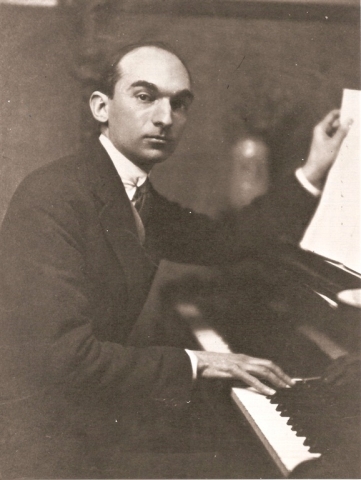
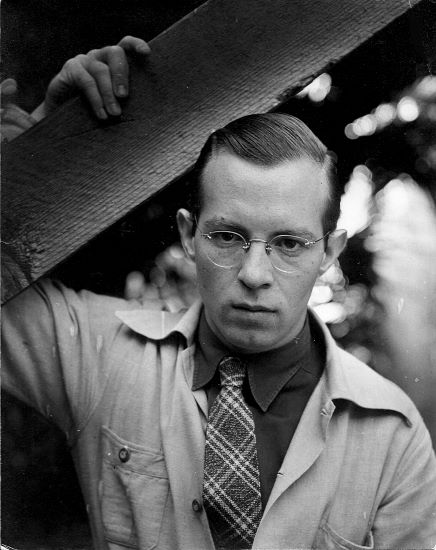
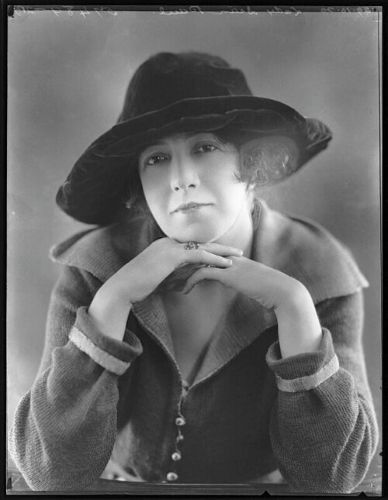
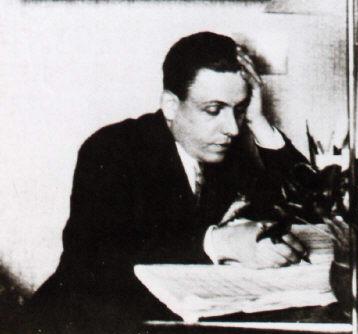
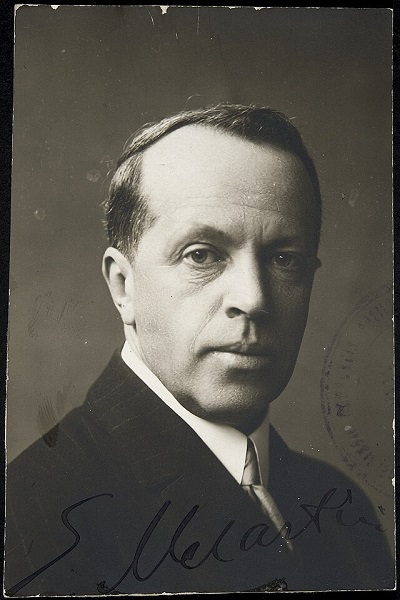
MELARTIN, Erkki

Born in Käkisalmi, Finland [now Priozersk, Russia], Feb 7, 1875
Died in Pukinmäki, Helsinki, Feb 14, 1937

  • Erkki Melartin (pronunciation) studied at the Helsinki Music School with Martin Wegelius (1892–9) and in Vienna with Robert Fuchs.
  • Melartin went on to serve as director of the Helsinki Music School from 1911–36, where he “raised an entire generation of composers as a teacher, and supported young modernists.”
  • As a composer, Melartin was incredibly prolific, and his extensive output includes six symphonies (in addition to several more pieces for orchestra), stage works, chamber music, art songs, choral pieces, piano works, and more.
    • Melartin’s music is rooted in the Late Romantic idiom while experimenting with the newer Impressionist and Expressionist styles.
    • Largely overshadowed by his Finnish contemporary, Jean Sibelius, Melartin was writing symphonies around the same time as Sibelius and maintained a distinctive style and musical voice throughout.1

Learn More

Short biography from Fennica Gehrman

Pieces


Categories
20th Century Italian

MENOTTI, Gian Carlo

Born in Cadegliano, Italy, 7 July 1911
Died in Monte Carlo, 1 Feb 2007

  • Gian Carlo Menotti had already written two operas by the time he enrolled at the Milan Conservatory at 13 years old. When he was in his late teens, he emigrated to the U.S. to study at the Curtis Institute, where he developed a close friendship with fellow student Samuel Barber. The two would become life partners and collaborate on several works together.
  • Menotti built a successful career for himself as a librettist, composer, and director. He wrote the libretto for two of Barber’s operas as well. He fused music and theater, with many of his operas produced on Broadway rather than in the opera house.
  • In 1950, Menotti won his first Pulitzer Prize for his opera, The Consul. He earned a second Pulitzer in 1955 for his opera, The Saint of Bleecker Street.
    • The Consul marked the first time an opera had won a Pulitzer Prize.
  • Fun tie-in to radio: Commissioned by NBC in 1939, The Old Maid and the Thief was one of the earliest operas written specifically for radio.
    • Furthermore, Amahl and the Night Visitors, also commissioned by NBC, was the first opera specifically written for television.2

Learn More
Biography via Ricordi

Categories
20th Century French

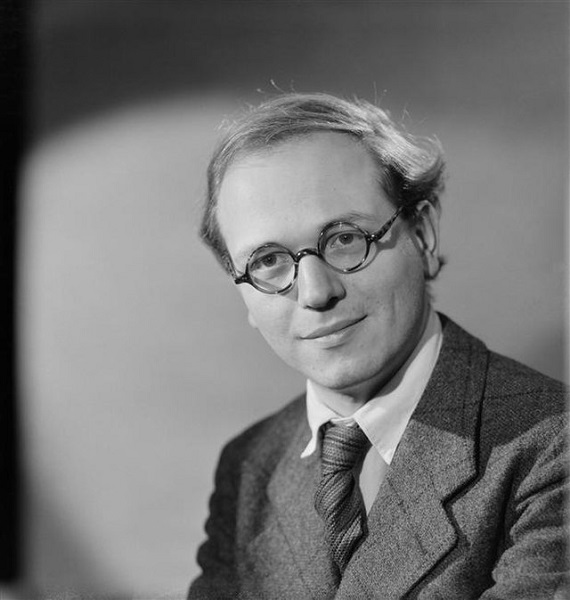
MESSIAEN, Olivier

Born in Avignon, Dec 10, 1908
Died in Paris, April 27, 1992

  • Olivier Messiaen was a French composer, organist, and educator whose music was highly influenced by his Roman Catholic faith and non-European cultures, mainly Indian and Japanese.3
  • In the most basic terms, Messiaen’s musical voice was distinctive and highly personal, filled with unique harmonic language, complex rhythms, and overall richness.
  • As a professor at the Paris Conservatory, he instructed many of the next generation’s prominent composers, such as Pierre Boulez and Karlheinz Stockhausen.4

Biography
Composer’s website

Categories
20th Century French

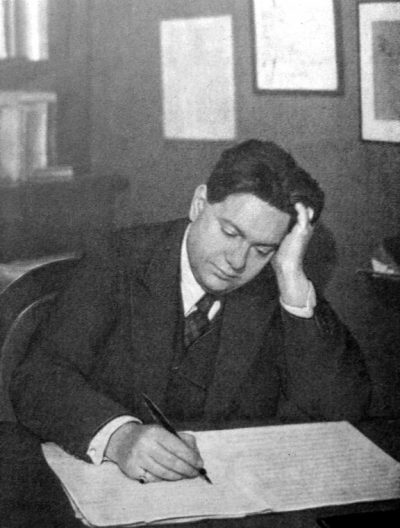
MILHAUD, Darius

Born in Marseilles, Sept 4, 1892 
Died in Geneva, June 22, 1974 

  • Milhaud grew up in Provence, where his father was an almond dealer. He reported that the songs of the amandières (the women who sorted almonds for sale) were one of the first musical influences in his life. 
  • Milhaud’s Paris Conservatory teachers included Dukas and Widor
  • Influences on Milhaud’s style were many and eclectic, including jazz, polytonality, and the music of Brazil (unable to serve in the military in WWI, he instead served as an attaché to the French minister in Brazil during the war years). 
  • Milhaud was part of the Satie-inspired, Jean Cocteau-befriended group of six French avant-garde composers active in the 1920s, known as Les six. 
  • In the latter part of his life, Milhaud divided his time between teaching at Mills College, Oakland, California, and at the Paris Conservatory. His students included Dave Brubeck.5

Biography from the Milken Archive 

Categories
20th Century Japanese

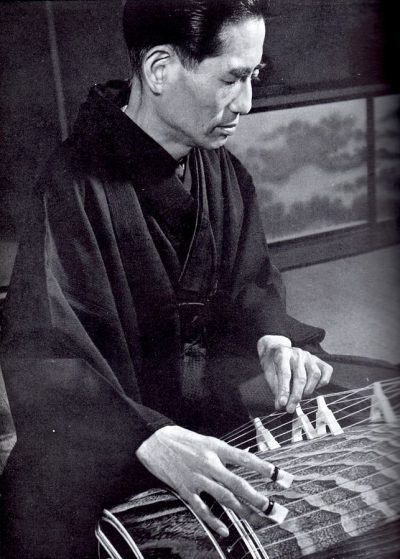
MIYAGI, Michio

Born in Sannomiya, Kobe, Japan, April 7, 1894 
Died in Kariya, Aichi prefecture, Japan, June 25, 1956 

  • Miyagi was a multi-instrumentalist and composer, and particularly a master of the koto
  • Miyagi was a professor at the Tokyo College of Music, which is now the Tokyo University of Fine Arts and Music. 
  • As a composer, Miyagi was part of a modernist movement that sought to add Western musical influences to traditional Japanese musical styles. 
  • Miyagi’s work included creating innovative new instruments inspired by the koto and other traditional Japanese instruments, to increase the compositional options for Japanese music.  
  • Miyagi had a disability: he lost his sight before the age of 8.6

Composer Website from the Miyagi Koto Association 

Categories
20th Century English

MOERAN, Ernest John

Born in Heston, Middlesex, England, Dec 31, 1894
Died near Kenmare, Co. Kerry, Ireland, Dec 1, 1950

  • Moeran was a prodigy who started to compose as a child, studied at the RCM, and later studied privately with John Ireland.
    • Moeran’s study at the RCM was interrupted by service in WWI. He initially served as a motorcycle dispatch rider, and was wounded in France in 1917.
    • In 1918 his battalion was sent to Ireland to deal with republican unrest. He collected a lot of Irish folk songs while he was there, and went back to collect more after he left military service.
  • Coming from an affluent family, Moeran had the ability to compose whatever music appealed to him, rather than having to worry about earning money from his works. He also had the ability to finance performances of his own music.
  • From 1925-1928 he shared a cottage with Philip Heseltine (Peter Warlock). Their home became a notorious partying house. Unfortunately, Moeran developed a debilitating alcohol dependency at this time, which affected his ability to compose.7
Categories
20th Century Spanish

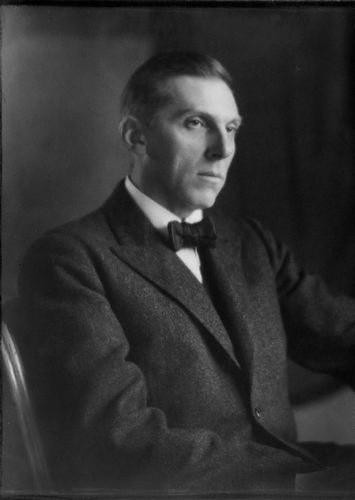
MOMPOU, Federic (or Federico)

Born in Barcelona, 16 April, 1893
Died in Barcelona, 30 June, 1987

[“mum-POW” / PRONUNCIATION]

  • Music historians claim that Federic Mompou was first inspired to become a composer after hearing a concert of Gabriel Fauré‘s music as a child. Mompou studied piano as well, but his extreme shyness and introverted nature dissuaded him from pursuing a career as a concert pianist.
  • Mompou studied at the Paris Conservatory and subsequently made Paris his home for two decades. He didn’t return to Barcelona until 1941, when he fled German occupation in Paris.
  • As a composer, Mompou largely wrote for his own instrument, the piano, and was heavily influenced by French composers such as Fauré, Debussy, and Satie.8

“The best word is the unspoken word, as all know I am a man of few words and composer of few notes… Music is written for the inexpressible, it should seem to come out of the shadow in order to move back in to the shadow.”9
Categories
20th Century Mexican

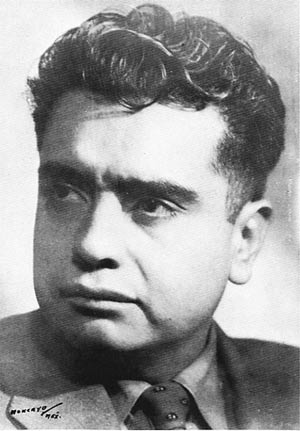
MONCAYO, José Pablo

Born in Guadalajara, June 29, 1912 
Died in Mexico City, June 15, 1958 

  • Moncayo studied with Carlos Chávez at the Mexico City Conservatory. He also took composition lessons with Aaron Copland in 1942. 
  • Moncayo formed the Group of Four with three other Mexican composers in 1934: the group wanted to foster a nationalist school of Mexican music (cf. Russia’s “The Five” and France’s “Les six”) 
  • Moncayo also conducted the National Symphony Orchestra (then called the Mexican Symphony Orchestra) from 1949-1954.10

Pieces


Categories
Late Romantic (~1860 – 1920) Italian

MONTI, Vittorio

Born in Naples, January 6, 1868
Died on June 20, 1922

Short biography

Pieces


Categories
20th Century American

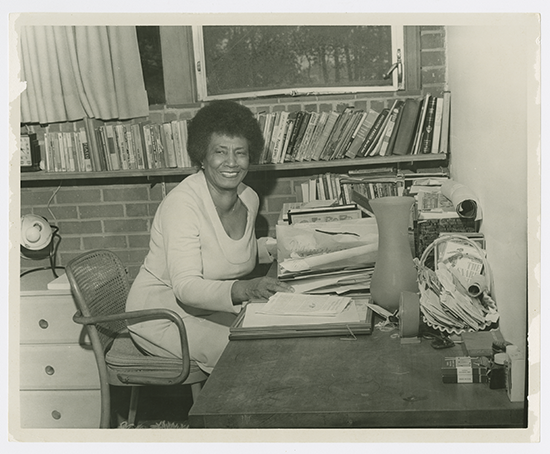
MOORE, Undine Smith

Born in Jarratt, VA, Aug 25, 1904 
Died in Petersburg, VA, Feb 6, 1989 

  • Moore was educated at Fisk University and Columbia University Teachers’ College. She also received honorary doctorates from Virginia State University and Indiana University.1
  • Moore was a professor at Virginia State University in Petersburg, where her educational accomplishments included co-founding and co-directing the university’s Black Music Research Center.2
  • Moore specialized in choral compositions and sacred music.3
  • Her oratorio on the life of Dr Martin Luther King Jr., Scenes from the Life of a Martyr, was nominated for a Pulitzer Prize in 1981.4

Biographical sketch from the Undine Smith Moore Collection at Indiana University, Bloomington 

Biography from African American Registry 

Biography from the African Diaspora Music Project 

Sources

  1. Olivia Mattis, “Moore, Undine Smith,“ Grove Music Online (2001), accessed February 24, 2022, https://www.oxfordmusiconline.com/grovemusic/view/10.1093/gmo/9781561592630.001.0001/omo-9781561592630-e-0000047040.
  2. Ibid.
  3. Ibid.
  4. “Undine Smith Moore Collection, 1951-1981” Indiana University Archives Online, accessed February 24, 2022, https://archives.iu.edu/catalog/VAE0300.

Pieces

Daniel, Daniel, Servant of the Lord

Afro-American Suite

Categories
20th Century Spanish

MORENO TORROBA, Federico

Born in Madrid, March 3, 1891
Died in Madrid, Sept 12, 1982

[PRONUNCIATION]

  • Federico Moreno Torroba’s decades-long career as a composer and conductor saw an enormous amount of political and cultural upheaval. Seen as “the last of the Spanish Romantics,” Moreno Torroba was a significant figure in 20th-century Spanish music.
  • As a composer, the bulk of Moreno Torroba’s compositional output comprises over 100 works for guitar (many written for Andrés Segovia) and ~ 80 zarzuelas. His music is accessible and lyrical, employing elements of folk and art music with a distinct Spanish character.
  • Moreno Torroba served as Comisario del Teatro de la Zarzuela, director of the Teatro Calderón and Compañía Lírica, and president of the Sociedad General de Autores de España (beginning in 1974).11
Categories
20th Century American

MOROSS, Jerome

Born in Brooklyn, August 1, 1913
Died in Miami, July 25, 1983

Learn More
Composer’s website

Categories
20th Century Russian

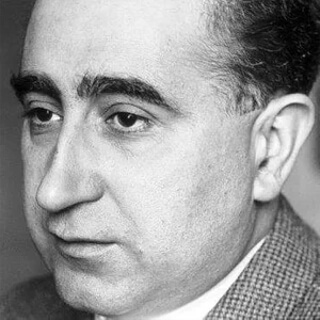
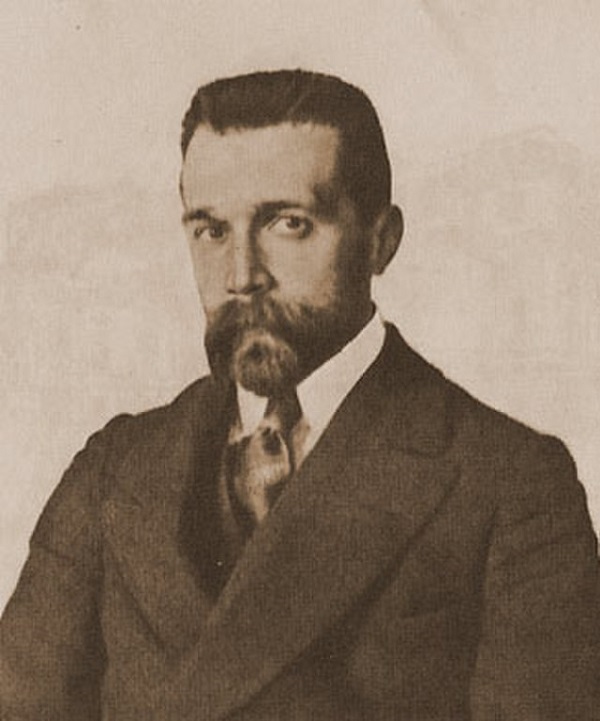
MYASKOVSKY, Nikolai

Born in the fortress of Novo-Georgiyevsk [now Modlin], Poland, 8/April 20, 1881
Died in Moscow, Aug 8, 1950

  • Nikolai Myaskovsky obtained a musical education during childhood but was forbidden from pursuing a music career (despite his passion for the subject) by his military engineer father.
    • After going through military training, Myaskovsky finally entered the St Petersburg Conservatory in 1906, where he studied composition with Lyadov and orchestration with Rimsky-Korsakov.
  • During WWI, as a reserve officer, Myaskovsky was mobilized and sent to the Austrian front. Following the October Revolution, he moved to Moscow in 1918.
    • Sad fact – Myaskovsky’s father died this same year under horrific circumstances. As a general of the Russian army, he was torn to pieces by the Revolutionary mob. This tragic event, combined with his experiences during the war, undoubtedly left a lasting effect on the composer. In fact, in Myaskovsky’s sixth symphony, “the finale relies on the contrast between songs of the French revolution (the ‘Carmagnole’ and ‘Ça ira’) and an old Russian sacred chant ‘O rasstavanii dushi s telom’ (‘On the Parting of the Body and Soul’) the title of which is of obvious significance.”
  • In 1921, Myaskovsky was invited to teach at the Moscow Conservatory, where he would remain until he died in 1950. Aram Khachaturian would become one of his pupils.
  • As a composer, Myaskovsky’s principal genre was the symphony. He wrote 27 (!) during his lifetime and is best known for these works, along with his string quartets.12
  • Fun fact – first meeting as students at the St Petersburg Conservatory, Myaskovsky and Prokofiev became lifelong friends.13

Learn More

Short biography

Pieces


Categories
20th Century Japanese

NARITA, Tamezō

Born in the Kitaakita District, Akita, 15 December 1893 
Died on 29 October 1945 

  • Narita was a member of the “Nursery Rhyme Movement,” a movement in art education in Japan during the Taisho period. Narita and the other composers in this movement wrote influential children’s songs partly inspired by Western nursery rhymes.14
  • Narita graduated in 1917 from the National School of Music in Tokyo,15 and subsequently studied music in Berlin from 1922-1926. He was one of several Japanese composers who visited Germany and other Western nations to music in the 1920s-40s.16
  • In the early twentieth century, Japan saw a flourishing movement of new poetry for children, often disseminated in literary journals for children. Narita’s music was sometimes also distributed this way. In her introduction to Yuki Ohta’s A Rainbow in the Desert: An Anthology of Early Twentieth-Century Japanese Children’s Literature, Joan E. Ericson tells how the text of “Canary,” one of Narita’s well-known songs, was first published in the journal Akai tori in 1918, a few months later, the same journal published Narita’s song setting of the poem. Ericson refers to Narita as “a famous composer of children’s songs.”17

NAZARETH, Ernesto

Born in Rio de Janeiro, March 20, 1863
Died in Rio de Janeiro, Feb 4, 1934 

  • Nazareth was a Brazilian pianist and composer of salon music (mostly dances for piano). 
  • Nazareth’s teachers included Louisiana-born composer Lucien Lambert Sr.  
  • Nazareth’s dances, especially his tangos, inspired composers like Heitor Villa-Lobos and Darius Milhaud.18 

Short biography and timeline from Musica Brasilis 

Categories
Late Romantic (~1860 – 1920) Danish

NIELSEN, Carl

Born in Sortelung, near Nørre Lyndelse, Funen, June 9, 1865
Died in Copenhagen, Oct 3, 1931

  • Nielsen is best known for his six symphonies, but he was also prominent in Denmark as a teacher, writer on music, conductor, and composer of songs.19

Biography from the Carl Nielsen Society

Categories
20th Century Czech

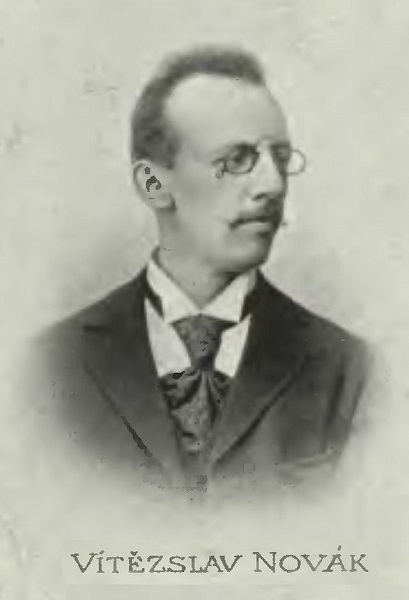
NOVÁK, Vítězslav

Born in Kamenice nad Lipou, Dec 5, 1870
Died in Skuteč, July 18, 1949

  • Vítězslav Novák studied under Antonín Dvořák at the Prague Conservatory. He eventually became a professor at the institution himself, influencing many future 20th Century Czech composers.
  • Novák’s music is known for its Czech nationalism and exploration of regional folk idioms.20
  • Sadly, Novák’s music is rarely heard today outside the Czech Republic despite the composer’s celebrity status during his lifetime.21

Biography

Categories
20th Century Japanese

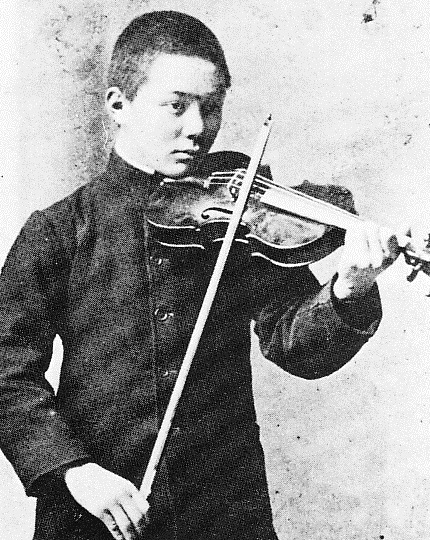
ONO, Tadasuke

May 3, 1895-December 3, 1929 

  • Ōno was a Japanese violinist and composer.22
  • The composer’s surname is sometimes transliterated as “Ohno.” 

Categories
20th Century German

ORFF, Carl

Born in Munich, July 10, 1895
Died in Munich, March 29, 198223

Biography from the American Orff-Schulwerk Association (Organization dedicated to Orff’s music education techniques)

Categories
20th Century English

ORR, Charles Wilfred

Born in Cheltenham, July 31, 1893
Died in Painswick, Feb 24, 1976

  • Orr is best known as a composer of art songs, particularly his settings of A.E. Housman’s poetry.
  • Orr and his wife lived a quiet life in the countryside because Orr was ill with eczema and tuberculosis most of his adult life.
  • Orr’s composition mentors included Frederick Delius and Peter Warlock.1

Composer biography

Sources

  1. Jane Wilson, “Orr, C(harles) W(ilfred),” Grove Music Online (2001), accessed November 19, 2019,  https://www.oxfordmusiconline.com/grovemusic/view/10.1093/gmo/9781561592630.001.0001/omo-9781561592630-e-0000020497.

Pieces

A Cotswold Hill-Tune

Categories
20th Century Romantic (~1820–1900) Polish

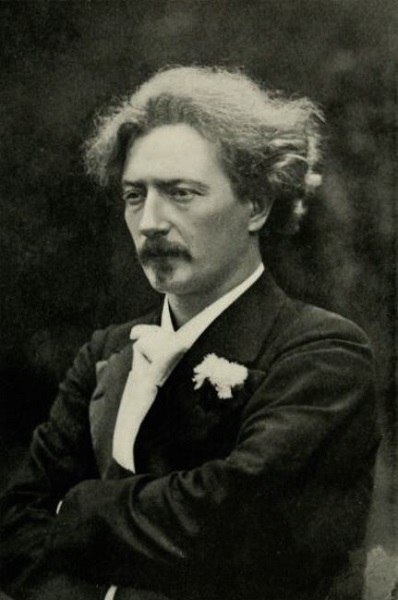
PADEREWSKI, Ignacy Jan

Born in Kuryłówka, Podolia province in Russian Poland, Nov 6, 1860,
Died in New York, June 29, 1941

[ig-NAT-see yahn pah-de-REF-ski; pronunciation]

  • Ignacy Jan Paderewski was a Polish concert pianist, composer, and politician.
  • In 1872, Paderewski attended the Warsaw Conservatory and became a professor of piano just a few years later.
  • In the late 1880s, Paderewski debuted as a concert pianist to much acclaim and developed an overwhelmingly devoted fan following (think Lisztomania).
  • During WWI, Paderewski became a member of the Polish National Committee. As a representative to the U.S., Paderewski urged President Wilson to support Polish independence, which he did as part of his “Fourteen Points.24
    • Fun fact – as a representative of Poland, Paderewski signed the Versailles Treaty in 1919. That same year, he became Prime Minister of the newly independent Poland. By 1922, he resigned all political positions and resumed his musical career.25
  • As a composer, the bulk of Paderewski’s oeuvre (unsurprisingly) consists of piano works, though he also wrote orchestral music, chamber music, choral music, art songs, and an opera.26
Categories
20th Century Finnish

PALMGREN, Selim

Born in Björneborg [now Pori], Feb 16, 1878
Died in Helsinki, Dec 16, 1951

[PRONUNCIATION | SEH-lim PALM-gren]

  • Selim Palmgren was a composer, conductor, and pianist best known for his works for the keyboard instrument.
  • Palmgren received his formal education at the Helsinki Music Institute, followed by studies in Germany and Italy. Once back in Finland, Palmgren worked as a conductor for about a decade, after which he devoted his career to composing and piano performance.
  • In the early 1920s, Palmgren toured the U.S., and in 1923, he began teaching composition at the Eastman School. He later became a professor of harmony and composition at the Sibelius Academy, Helsinki.27
  • As a pianist, Palmgren regularly accompanied his wife, Maikki Pakarinen, who was a Finnish operatic soprano.28
  • Palmgren’s music has not withstood the test of time well, partly because the composer did little to promote his own work, and partly because many of his works are undated and remain in manuscript.29
Categories
20th Century Romantic (~1820–1900) English

PARRY, Sir Charles Hubert Hastings

Born in Bournemouth, Feb 27, 1848
Died in Rustington, Sussex, Oct 7, 1918

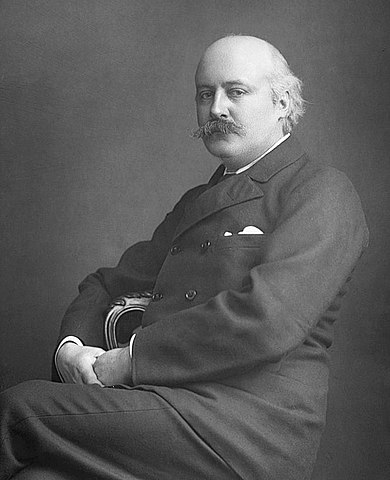
  • Sir Charles Hubert Hastings Parry was one of the foremost English composers, music scholars and teachers of the 19th century and did much to revitalize music education standards in England.
  • Parry’s most influential musical mentor was Edward Dannreuther, who was largely responsible for aiding Parry’s passion for Richard Wagner‘s music.
  • Parry was Director of the Royal College of Music from 1895 to the end of his life. Due to this role, in addition to his position as Heather Professor of Music at Oxford from 1900-08, Parry was essentially the face of British classical music at the time.
  • Fun fact: Parry worked for George Grove as a sub-editor for the first edition of Grove’s Dictionary of Music and Musicians. Parry wrote more than 100 articles in the first Grove’s.30

“Although Parry’s ceremonial music embodies a sense of strength and confidence, on a deeper level his musical language imparts something much more aspirational – a longing for a better world in which music will help to raise humanity to new heights.”31

Short biography
Timeline via Google Arts & Culture

Categories
20th Century Late Romantic (~1860 – 1920) Croatian

PEJAČEVIĆ, Dora 

Born in Budapest, Sept 10, 1885 
Died in Munich, March 5, 1923 

Pronunciation (IPA): [peja’tʃɛvɪtʃ] 

Pronunciation: “peh-ya-CHEH-vich” 

  • Pejačević was a Croatian composer whose musical style is late Romantic and Impressionist. Her works include a symphony, a piano concerto, vocal works and chamber works.32
  • Pejačević was a member of Croatian nobility and she grew up in her family’s estate at Našice, Slavonia.33
  • Pejačević studied at the Croatian Music Institute in Zagreb,34 and privately in Dresden and Munich.35.
  • Pejačević’s Piano Concerto in g minor, Op. 33, was the first concerto by a Croatian composer. During her lifetime, her music was performed many times in musical centers of Germany, Austria, and Croatia.36 
  • Pejačević died shortly after the birth of her first child, at the age of 38.37

Biography from the Croatian Music Information Center 

Categories
20th Century Catalan

PERELLÓ, Mariano

Born in Barcelona, 1886
Died in Barcelona, Nov 26, 1960

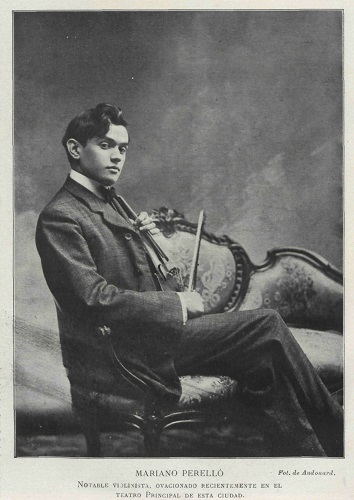
  • Mariano Perelló was a distinguished Catalan violinist, pianist, and educator. He established collaborative friendships with Enrique Granados and Isaac Albéniz, both of whom helped the young musician further his career.
  • Together with cellist Pere Marés i Gribbin and pianist Ricardo Viñes, the three musicians created the Trio Barcelona. For 25 years, the trio toured throughout Europe and South America.36
Categories
20th Century American

PERKINSON, Coleridge-Taylor

BoBorn in Winston-Salem, NC, June 14, 1932
Died in Chicago, IL, Mar 9, 2004

Biography from Keiser Southern Music

Biography from AfriClassical

Sources

  1. Carman Moore and Anya Laurence, “Perkinson, Coleridge-Taylor.” Grove Music Online (February 6,  2012), accessed May 17, 2021, https://www.oxfordmusiconline.com/grovemusic/view/10.1093/gmo/9781561592630.001.0001/omo-9781561592630-e-1002219404
  2. Ibid.
  3. Ibid.
  4. “Composers: Coleridge-Taylor Perkinson,” Keiser Southern Music (2020), Accessed May 17, 2021, https://www.keisersouthernmusic.com/composers/coleridge-taylor-perkinson.

Pieces

String Quartet No. 1, “Calvary”

Blue/s Forms

Sinfonietta No. 1 for Strings

Sonata for Flute and Piano

Categories
20th Century Late Romantic (~1860 – 1920) Brazilian

PERNAMBUCO, João

Born in Jatobá, November 2, 1883 
Died in Rio de Janiero, October 16, 19471

Pronunciation: first name 
Pronunciation: last name 

Born João Teixeira Guimarães (Pernambuco, the state in which he was born, appears to have been a stage name) 

  • Pernambuco came from a poor Brazilian family. His father was Portuguese, and his mother was a member of the indigenous Caeté people.
  • Pernambuco learned the music as a child, from street musicians. 
  • Pernambuco played and composed throughout his life, but earned a living as an ironworker. 
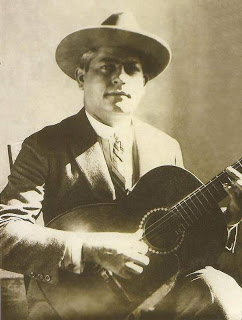
  • Pernambuco was master of the Brazilian musical genre of chôro . 
  • Due to his illiteracy, Pernambuco had to rely on other musicians to transcribe and publish his compositions. Unfortunately, this resulted in the theft of many of this works by unscrupulous composers. One exception was Heitor Villa-Lobos, who heard of Pernambuco’s trouble and had several of the composer’s works published with Pernambuco properly attributed.2
  • Pernambuco called himself “The Troubadour of the Poor.”3
  • Biography from AllMusic 

Sources

  1. “João Pernambuco,” Musica Brasilis, accessed July 14, 2021, https://musicabrasilis.com/composers/joao-pernambuco
  2. “João Pernambuco,” Alvaro Neder, AllMusic, accessed July 14, 2021, https://www.allmusic.com/artist/jo%C3%A3o-pernambuco-mn0002296953.  
  3. Graham Wade, liner notes to Guitar Recital, Pedro Aguiar, Naxos 8.574069, CD, 2020. 

Pieces

Categories
20th Century American

PERRY, Julia

Born in Lexington, KY, 25 Mar 1924
Died in Akron, OH, 24 April 1979

  • Julia Perry received both her Bachelor and Masters Degrees from Westminster Choir College. A few years later, she went on to study composition in Europe with names such as Luigi Dallapiccola and Nadia Boulanger.
  • Early on in her career, Perry was heavily influenced by her Western classical education while still drawing on African American influences, including Spirituals and the blues. However, as the climate around race in the U.S. shifted in the late 1950s and early 1960s, her works became more outwardly expressive of her own experience as a Black woman. She also became more bold in calling out injustices she witnessed occurring around her.37
  • As a composer, Perry wrote music for orchestra, chamber ensemble, chorus, and voice. Unfortunately, much of her work was lost following her death or has yet to be published.
  • In 1970, Perry suffered a debilitating stroke that paralyzed her right side and made her unable to speak. She taught herself to write with her left hand so she could continue composing; however, more strokes over the next few years would greatly hinder her recovery. She died in 1979 of a heart attack at 55 years old.
    • While she continued writing up until her death, many of her post-stroke manuscripts have left potential publishers and advocates of her work unable to confidently read her writing, leading to a significant lack of published work for the composer despite her prolific career.38
Categories
20th Century Late Romantic (~1860 – 1920) German

PFITZNER, Hans

Born in Moscow, May 5, 1869
Died in Salzburg, May 22, 1949

  • Pfitzner was a conservatory professor, conductor and a composer of late Romantic, anti-modernist theatrical music (mostly opera and incidental music).
  • Pfitzner’s musical conservatism (a dedication to the German Classical and Romantic tradition) caused him to vocally oppose the modernist and popular styles of his time, in a pro-German xenophobic manner that make him sympathetic to the Nazis when they rose to power in the 1930s.
    • Pfitzner’s political relationship with the Nazi party was complicated. He tried to use his influence to save a Jewish friend from a concentration camp and failed.39

Biography

Categories
20th Century Argentinian

PIAZZOLLA, Astor

Born in Mar del Plata, March 11, 1921
Died in Buenos Aires, July 5, 1992

  • Born in Argentina to Italian immigrants, Piazzolla was a bandoneón child prodigy who grew up in New York’s Greenwich Village.
  • As a young person, Piazzolla worked in Argentine dance bands and studied classical music with Alberto Ginastera.
  • Piazzolla studied in Paris with Nadia Boulanger, who encouraged his unique blend of tango influenced by classical and jazz styles, which he called tango nuevo.40
    • Piazzolla is responsible for bringing Tango, the beloved national genre of Argentina, to the international stage. However, many native Argentinians disapproved of the composer’s tango nuevo and thought his music cold and cerebral.
    • Nevertheless, Piazzolla’s distinctive voice is widely appealing and accessible to lovers of classical, jazz, and popular music.41

Learn More

Biography from the Philadelphia Chamber Music Society
Biography from Britannica

Categories
Late Romantic (~1860 – 1920) French

PIERNÉ, Gabriel

Born in Metz, Aug 16, 1863
Died in Ploujean, Finistère, July 17, 1937

  • Pierné studied at the Paris Conservatoire with César Frank (organ) and Jules Massenet (composition).
  • Pierné won the Prix de Rome when he was 19.
  • Pierné was the conductor of the Concerts Colonne, in which capacity he directed premieres of works by Debussy and Ravel. He also directed the premiere of The Firebird for the Ballets Russes.42

Short biography

Pieces


Categories
20th Century American

PISTON, Walter

Born in Rockland, ME, 20 Jan 1894
Died in Belmont, MA, 12 Nov 1976

  • Walter Piston was a self-taught musician. As a young adult, he earned money playing piano and violin in dance bands, orchestras, and chamber ensembles in Massachusetts.
    • When the U.S. joined WWI, Piston quickly taught himself the saxophone so he could join the Navy Band.
  • Following the war, Piston pursued music studies at Harvard, then spent a period at the École Normale de Musique in Paris, where he studied with Paul Dukas, Nadia Boulanger, and George Enescu.
  • Piston returned to Boston in 1926 and joined the music faculty at Harvard, a position he maintained until 1960. He spent summers composing.
    • As an educator, Piston wrote several significant textbooks: Principles of Harmonic Analysis (1933), Harmony (1941), Counterpoint (1947), and Orchestration (1955).
    • Leonard Bernstein, Elliott Carter, and Leroy Anderson were among his students.
  • As a composer, Piston’s earlier works were largely neoclassical. Later on, he explored more complex harmonies as well as serialism (within a tonal context).
    • He had a close, collaborative relationship with Serge Koussevitzky at BSO and wrote many orchestral works for the ensemble.
    • Among MANY other accolades, Piston won two Pulitzer Prizes: one for Symphony No. 3 and one for Symphony No. 7.43

Learn More
Bio via Atlanta Symphony Orchestra
Bio via American Symphony Orchestra

Categories
20th Century Late Romantic (~1860 – 1920) English Polish

POLDOWSKI (Lady Irène Dean Paul)

Born in Brussels, May 16, 1879
Died in London, Jan 28, 1932

  • Poldowski was the daughter of violinist and composer Henryk Wieniawski, though he died when Poldowski was only 10 months old.
    • Interesting fact: Poldowski was the only one of Wieniawski’s seven children to go into music professionally.
    • Poldowski was an intentionally genderless pseudonym the composer used to publish her works. She was known by many names during her lifetime: Régine Wieniawski, Irène Wieniawska, and Lady Dean Paul.
  • Although she was born in Brussels, Poldowski spent most of her life in England. Her mother was English, and Poldowski married Sir Aubrey Dean Paul in 1901, later becoming a naturalized British citizen.
  • As a composer, Poldowski began performing her own works while still a teenager. She became most famous for her art songs. She also wrote works for orchestra and chamber ensemble. French artists were a primary source of inspiration for her (most of her songs use French poetry).44
  • Additional fun fact: Poldowski developed a love of fashion and opened a clothing boutique where she designed some of the pieces herself.45

Learn More
Biography via Interlude

Pieces


Categories
Late Romantic (~1860 – 1920) Mexican

PONCE, Manuel

Born in Fresnillo, Zacatecas, Dec 8, 1882 
Died in Mexico City, April 24, 1948 

Full name: Manuel María Ponce Cuéllar  

  • Ponce was recognized as the leading Mexican composer of his time, instrumental in helping to create a Mexican national style.
  • As a young man, Ponce was a church chorister and organist. He then went on to study music in Mexico City, then in Bologna, Italy, and then in Berlin, before returning to Mexico. He also visited France from 1925-1933 to refresh his compositional style, studying with Dukas and collaborating with Andrès Segovia
  • Ponce served at the Conservatorio Nacional in Mexico City as a piano professor, and latterly as its Director.
  • Ponce was a lecturer on musicology, especially Mexican music. He also edited Mexican music publications and wrote extensively on musical topics.46

Short biography

Categories
20th Century French

POULENC, Francis

Born in Paris, Jan 7, 1899
Died in Paris, Jan 30, 196347

Short biography from Naxos

Categories
20th Century American

PRICE, Florence

Born in Little Rock, AR, 9 April 1887 
Died in Chicago, IL, 3 June 1953 

Born Florence Beatrice Smith 

  • Price was the first African-American woman to achieve national recognition as a composer. 
  • Price studied at the New England Conservatory, and was also a student of George Whitefield Chadwick
  • Price’s Symphony no. 1 in e minor won the Wanamaker Competition in 1932, which provided a premiere with the Chicago Symphony in 1933. This premiere constituted the first time a major American orchestra performed a work by an African-American woman. 
  • Price was especially prolific and successful as a composer of art songs.48

Florence Price website maintained by Price scholar and Karen Walwyn 

Categories
20th Century Russian

PROKOFIEV, Sergei

Born in Sontsovka, Bakhmutsk region, Yekaterinoslav district, Ukraine, 11/April 23, 1891
Died in Moscow, March 5, 1953

Biography

Categories
Late Romantic (~1860 – 1920) Italian

PUCCINI, Giacomo

Born in Lucca, Dec 22, 1858
Died in Brussels, Nov 29, 1924

  • Fun fact: Giacomo Puccini represented the fifth generation of musicians and composers in his family. His family had been professional musicians in Lucca since the 1700s.49
Categories
20th Century Late Romantic (~1860 – 1920) English

QUILTER, Roger

Born in Hove, Nov 1, 1877
Died in London, Sept 21, 1953

  • Quilter was best known as a writer of English art song, especially favoring texts by Shakespeare, Shelley and Herrick.50

Short biography

Categories
Late Romantic (~1860 – 1920) Russian

RACHMANINOV, Sergei

Born in Oneg, 20 March/April 1, 1873
Died in Beverly Hills, CA, March 28, 1943

Biography