Categories
Romantic (~1820–1900) Czech

DREYSCHOCK, Alexander

Born in Žáky, Oct 16, 1818
Died in Venice, April 1, 1869

  • Alexander Dreyschock [DRY-shock] was a virtuoso pianist who debuted at 8 years of age and undertook many solo concert tours throughout Europe during his career. He also taught at the St. Petersburg Conservatory.
  • Dreyschock specialized in performing his own compositions.

“The man has no left hand! Here are two right hands!”

J.B. Cramer, upon hearing Dreyschock play in Paris 1

Short biography

Categories
Classical (~1750–1820) Czech

DUSSEK, Franz Xaver

Born František Xaver Dušek
[Pronunciation | DOO-shek]

Born in Chotěborky, near Jaroměř, Bohemia, bap. Dec 8, 1731
Died in Prague, Feb 12, 1799

Biography from Artaria Editions

Pieces


Categories
Romantic (~1820–1900) Czech

DVOŘÁK, Antonín

Born in Nelahozeves, near Kralupy, Sept 8, 1841
Died in Prague, May 1, 1904

[PRONUNCIATION | “AHN-toh-neen duh-VOR-zhak”]

Short biography

Categories
Romantic (~1820–1900) Czech

FIBICH, Zdeněk

Born in Všebořice, Bohemia, December 21, 1850
Died in Prague, October 15, 1900

[PRONUNCIATION | ZDEH-nyek FIH-bich]

  • Compared to Smetana and Dvořák, Zdeněk Fibich had a quieter but no less significant influence on Romantic Czech music. Many of his works inspired his contemporaries, and he preferred subtlety and inventiveness over musical “excess.”
  • As a composer, Fibich is best known for his melodramas, symphonic poems, and piano pieces. He received his musical training in Vienna, Leipzig, and Paris, which may have contributed to his “ambivalence” towards writing overtly Czech national music compared to his contemporaries.
    • Unlike Smetana and Dvořák, Fibich didn’t embrace folk music and/or nationalistic elements in his music but rather presented a more broadly European Romantic language. That being said, his tone poem based on a Czech subject, Záboj, Slavoj and Luděk, inspired Smetana’s Má vlast.2

Learn More
Short bio via The Kennedy Center

Pieces


Categories
Late Romantic (~1860 – 1920) Czech

FOERSTER, Josef Bohuslav

Born in Prague, Dec 30, 1859
Died in Nový Vestec, nr Stará Boleslav, Bohemia, May 29, 1951

[YO-sef BOH-hoo-slahv FUR-ster | PRONUNCIATION]

  • Josef Bohuslav Foerster was a composer, music critic, and educator. He was a contemporary of Leoš Janáček and Gustav Mahler.
    • *Foerster’s last name is also spelled Förster
  • Foerster came from a musical family. His father (also named Josef) was an organist and choirmaster in the foremost Prague churches and served on the faculty at Prague Conservatory. His uncle Antonín was a pupil of Smetana as well as an organist, choirmaster, and conductor.
  • Foerster married soprano Berta Lautererová and moved to various cities around central Europe based on her singing engagements, including Hamburg and Vienna. He always took up prominent teaching positions wherever he landed, in addition to composing and writing for journals.
    • In 1918, the couple returned to Prague. Foerster continued to teach at prominent institutions, such as the Prague Conservatory and the Charles Conservatory.
  • Despite having faded into the background among other Czech composers, Foerster was a highly respected figure during his lifetime and held several notable titles. From 1920-45, he was president of the Association of Czechoslovak Composers, Authors, and Music Publishers, and from 1931–9, he was president of the Czech Academy of Sciences and Art. In 1945, he was awarded the title of National Artist.
  • As a composer, Foerster was a traditionalist deeply loyal to the nationalist 19th-century vernacular. His extensive compositional oeuvre includes opera, cantatas, choral music, songs, orchestral music, chamber pieces, and more.3

Learn More

Short biography from Naxos
Short biography from Britannica

Categories
Romantic (~1820–1900) Czech

FUČIK, Julius

Born in Prague, July 18, 1872
Died in Berlin, Sept 25, 1916

[YOO-lee-oos foo-CHEEK | PRONUNCIATION]

Short biography from Naxos

Categories
Late Romantic (~1860 – 1920) Czech

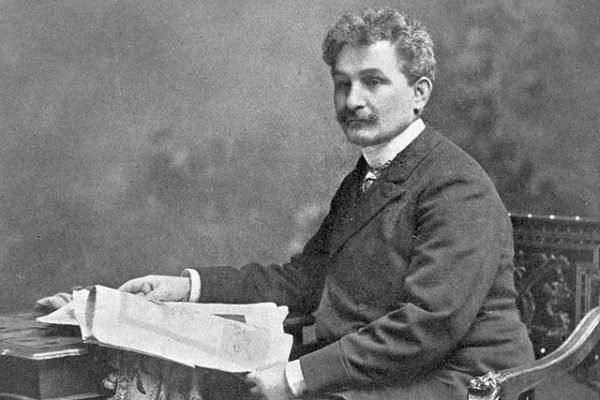
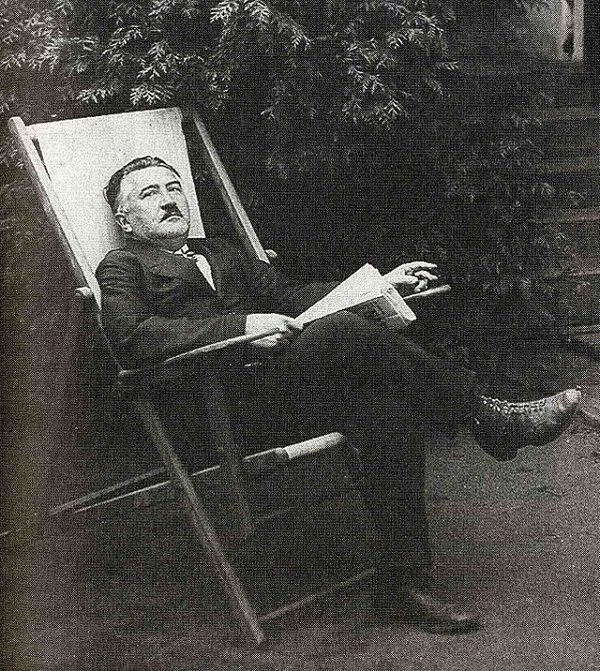
JANÁČEK, Leoš

Born in Hukvaldy, Moravia, 3 July 1854
Died in Moravská Ostrava, 12 Aug 19284

Pronunciation
[‘leoʃ jan’atʃɛk]
“LAY-osh ya-NA-check”
Listen

Biography from LeosJanacek.eu

Pieces


Categories
20th Century Czech

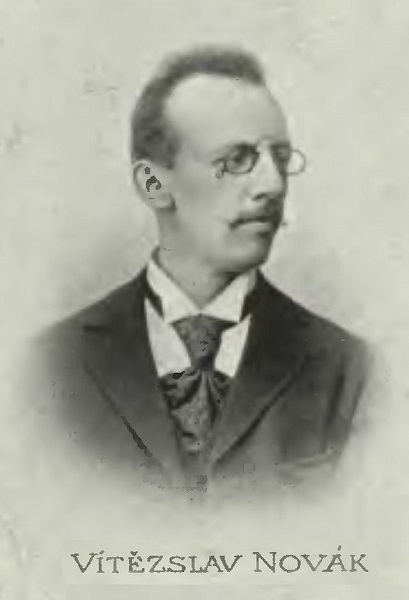
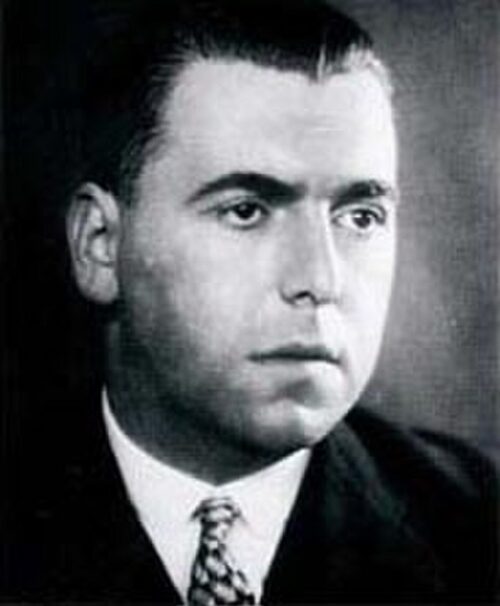
NOVÁK, Vítězslav

Born in Kamenice nad Lipou, Dec 5, 1870
Died in Skuteč, July 18, 1949

  • Vítězslav Novák studied under Antonín Dvořák at the Prague Conservatory. He eventually became a professor at the institution himself, influencing many future 20th Century Czech composers.
  • Novák’s music is known for its Czech nationalism and exploration of regional folk idioms.5
  • Sadly, Novák’s music is rarely heard today outside the Czech Republic despite the composer’s celebrity status during his lifetime.6

Biography

Categories
Classical (~1750–1820) Czech

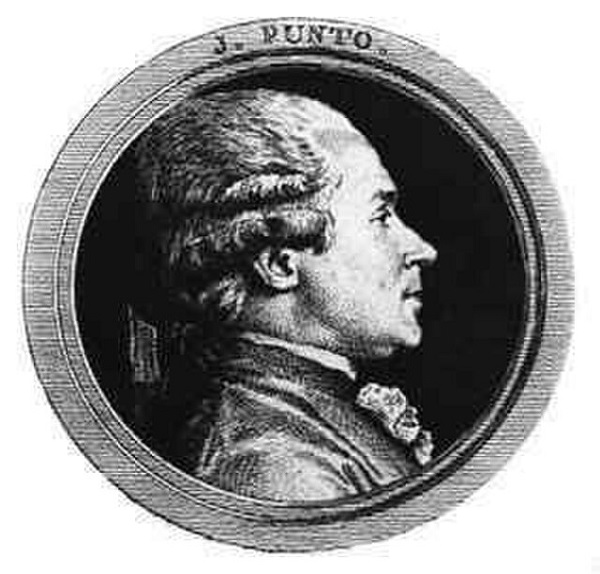
PUNTO, Giovanni

Born in Zehušice, nr Čáslav, Sept 28, 1746
Died in Prague, Feb 16, 1803

  • Jan Václav Stich (or Johann Wenzel Stich) was a Czech horn player, violinist, and composer who took on an Italian pseudonym, Giovanni Punto, as an adult.
    • Born the son of a serf, Punto received music lessons during his upbringing and was even sent to Dresden for a period to study with A.J. Hampel. Upon returning to Bohemia, Punto served under his master, Count Thun, for four years before fleeing the estate and seeking better opportunities in the Holy Roman Empire (hence the name change).
  • Punto built a successful international career as a touring horn virtuoso. Several prominent names of the day composed works for Punto, including Mozart (Sinfonia concertante K. 297B) and Beethoven (Horn Sonata Op.17).

“Works written by and for him show that Punto was a master of quick arpeggios and stepwise passage work. Mozart’s high opinion (‘Punto bläst magnifique’), expressed in a letter of 1778, was shared by Beethoven, and virtually all contemporary writers referred to the vocal quality of his playing.”

Grove Music Online7
  • As a composer, Punto wrote works for horn to highlight his skills and virtuosity. He also regularly arranged works by other composers for his instrument (sometimes even publishing them under his own name…).
  • Fun/ morbid fact – at Punto’s funeral, Mozart’s Requiem was played at the graveside.8

Learn More
Biography from the International Horn Society

Pieces


Categories
20th Century Modernist (~1890– ) Czech

SCHULHOFF, Erwin

Born in Prague, June 8, 1894
Died in Wülzburg, Aug 18, 1942

  • Erwin [pronounced “air-vin”] Schulhoff was a Jewish Czech composer and pianist of German descent.
    • Schulhoff was a piano prodigy who, upon the recommendation of Dvořák, was encouraged to pursue a musical career. In his formal studies, Schulhoff encountered many established composers of the day and was inspired by everyone from Schumann and Brahms to Debussy and Scriabin. His overall training was varied and thorough, setting Schulhoff up for what should have been a long, fruitful career.
  • In 1914, Schulhoff was conscripted into the Austrian army, where he spent four years. The experience proved to be one of significant disillusionment for the composer, not only shifting his political sentiment (he soon after became a passionate socialist) but also shifting his musical style.
    • Before WWI, Schulhoff wrote in a late romantic style. After his experience on the battlefront, he turned toward Expressionism, Dadaism, and neo-classical style, eventually embracing avant-garde.
      • Fun fact – Schulhoff was one of the first European composers to embrace Jazz.
    • Schulhoff wrote many works for unusual combinations, such as Hot Sonata for saxophone and piano, Sonata Erotica for solo voice “imitating coital sighs and cries,” and a concertino for flute, viola, and double bass.
  • Schulhoff’s tragic demise played a large role in nearly erasing the composer’s music from history. Despite (unsuccessfully) attempting to emigrate to the Soviet Union, Schulhoff was arrested and imprisoned in 1941, eventually being deported to a concentration camp in Wülzburg, Bavaria, where he died only a few months later.9

Learn More
Biography via The OREL Foundation

Categories
Romantic (~1820–1900) Czech

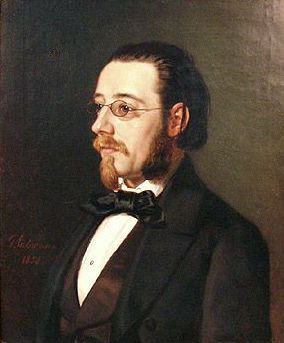
SMETANA, Bedřich

Born in Leitomischl, Bohemia [now Litomyšl, Czech Republic], 2 March 1824
Died in Prague, 12 May 1884

  • Often described as “the father of Czech music,” Bedřich Smetana’s [pronunciation] music became synonymous with Czech national musical style in the years following his death. In the Czech Republic, he remains a musical legend.
    • Fun fact – Since Bohemia was part of the Austrian Empire for a period of time in the 1800s, Smetana’s first language was German. He didn’t learn to speak Czech until adulthood.
  • As a composer, Smetana is best known for his operas and his cycle of six tone poems, Má vlast.10 
  • As a young emerging pianist and composer, Smetana idolized Liszt, to whom he dedicated his first published work, Six morceaux caractéristiques, Op. 1. Liszt would become a significant supporter of Smetana’s music.
  • While studying and composing abroad during the 1850s, Smetana was faced with the popular opinion that Czechs were incapable of creating music of their own. Such remarks fueled Smetana’s desire to devote himself to creating native Czech music.

“Smetana stands forth as a musician of extraordinary imaginative and constructive power, and as a patriot of the genuinely noble ideal, not the pseudo blatant chauvinistic type. Like so many geniuses, Smetana starved in early life and never greatly prospered. Like Beethoven, he became deaf and like Schumann, he died in a lunatic asylum. Struggle, death and transfiguration – martyrdom and canonization; this is the typical fate of the true artist.”

Frederick Niecks11

Learn More
Biography from Deutsche Grammophon

Categories
20th Century Late Romantic (~1860 – 1920) Czech

SUK, Josef

Born in Křečovice, Jan 4, 1874
Died in Benešov, nr Prague, May 29, 1935

  • Josef Suk was the child of a choirmaster/ schoolmaster, from whom he learned to play piano, violin, and organ. In 1885 (age 11), Suk entered the Prague Conservatory. He stayed on an extra year after graduation to study composition with Antonín Dvořák, becoming the composer’s favorite pupil.
    • Fun fact: in 1898, Suk married Dvořák’s daughter, Otilie (Otilka).
    • In 1922, Suk himself became a professor of composition at the Prague Conservatory.
  • As a composer, Suk was most at home with instrumental music. He was seen by many as Dvořák’s musical successor. His earlier works display qualities of sensuous late romanticism. Following the deaths of his father-in-law in 1904 and his wife in 1905, Suk’s music took a dramatic turn towards more complexity, introspection, and even polytonality.
  • Unlike many of his Czech predecessors, Suk almost never drew on folk music or literary sources for inspiration.
  • In addition to composition, Suk led a distinguished international career as a violinist in the Czech Quartet until he retired from performing in 1933.12

Learn More

Biography from Seattle Chamber Music Society

Categories
Contemporary American Czech

SVOBODA, Tomas

Born in Paris, Dec 6, 1939
Died in Portland, OR, Nov 17, 2022

Biography
Composer’s website

Categories
Classical (~1750–1820) Czech

VANHAL, Johann Baptist

Born in Nechanice, Bohemia, May 12, 1739
Died in Vienna, Aug 20, 1813

[YO-han BAP-tist vahn-HALL]

  • Johann Baptist Vanhal (also spelled Wanhal) came from humble origins. He was born into serfdom in a small Bohemian town, though his family recognized his musical talent and encouraged and supported his studies as best they could. They even had the foresight to have Vanhal learn German so he could eventually pursue music in Vienna.
  • Thanks to the sponsorship of a countess who heard Vanhal perform on the organ and violin (and his compositions for the instruments), Vanhal was able to move to Vienna in the early 1760s.
  • In Vienna, Vanhal established himself as one of the city’s leading composers.13
  • As a composer, Vanhal was incredibly prolific. He wrote over 70 symphonies, in addition to dozens of masses, string quartets, and other works.
  • Vanhal was groundbreaking in that he was among the first prominent composers to build a successful freelance career (composing, teaching, and performing). He was highly respected by his Austrian contemporaries, such as Haydn and Mozart, both of whom performed his works.
  • As a teacher, Vanhal’s most well-known student was Ignaz Pleyel.14

Learn More
Biography via Interlude

Pieces


Categories
20th Century American Czech

WEINBERGER, Jaromír

Born in Prague, Jan 8, 1896
Died in St Petersburg, FL, Aug 8, 196715

Biography

Pieces