Categories
Contemporary Finnish

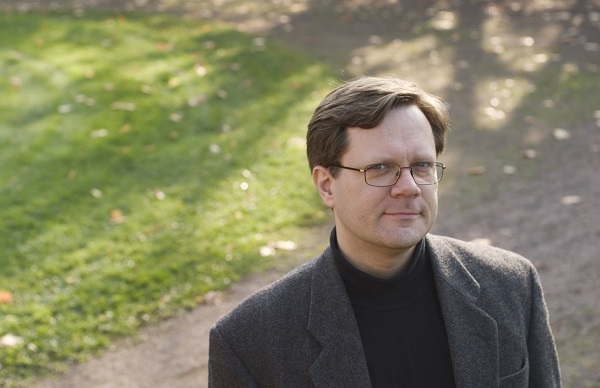
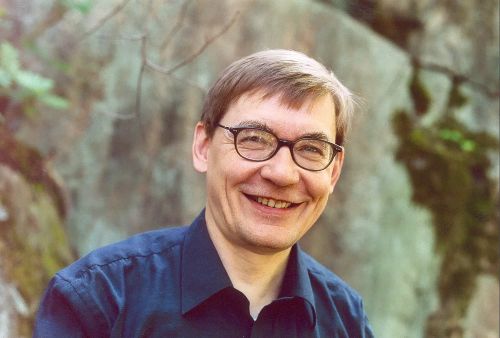
AHO, Kalevi

Born in Forssa, March 9, 1949

[KAH-leh-vee AH-ho | PRONUNCIATION]

  • Kalevi Aho studied composition with Einojuhani Rautavaara at the Sibelius Academy, earning his diploma in 1971, followed by further studies in Berlin with Boris Blacher.
  • Aho taught for two decades before deciding to work as a freelance composer full-time. He taught music theory at Helsinki University from 1874-88 and composition at the Sibelius Academy from 1988-93.
  • As a composer, Aho is primarily known for his large-scale works “that show the influence and spirit of Mahler and Shostakovich.” Aho has written 18 symphonies, 45 concertos, and five operas, as well as several works for chamber ensemble, voice, and solo piano.
    • Fun fact – Aho has written a concerto for almost every orchestral instrument.
  • Aho does not strictly adhere to any one musical style but rather believes that musical material, from traditional to modern and postmodern, is of equal value and importance.1

Learn More
Biography via Fennica Gehrman
Categories
Classical (~1750–1820) Finnish Swedish

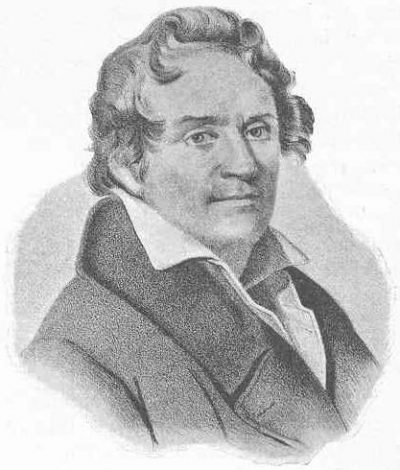
CRUSELL, Bernhard

Born in Uusikaupunki, Finland, Oct 15, 1775
Died in Stockholm, July 28, 18382

[Pronunciation]

Biography from Swedish Musical Heritage

Categories
20th Century Romantic (~1820–1900) Finnish Swedish

JÄRNEFELT, Armas

Born in Viipuri [now Vyborg, Russia], Aug 14, 1869
Died in Stockholm, June 23, 1958

[AR-mas YAIR-neh-felt | PRONUNCIATION]

  • Composer and conductor Armas Järnefelt was of Finnish birth and later took Swedish nationality.3
  • While studying at the Helsinki Institute of Music under Ferruccio Busoni, Järnefelt met both his soon-to-be-friend and fellow composer, Jean Sibelius, and his future first wife, soprano Maikki Pakarinen.
    • Fun fact – Järnefelt’s younger sister, Aino, married Sibelius. The couple became acquainted when Armas brought his friend to his family home for a visit.
  • Following his graduation from the Institute, Järnefelt pursued further studies, first in Berlin with Albert Becker, followed by Paris with Jules Massenet.
  • As a composer, Järnefelt wrote works for orchestra, choir, and solo piano.
  • In addition to composing, Järnefelt took on conducting posts throughout his career. He is best known for his position as principal conductor of the Royal Swedish Opera (where he met his second wife, mezzo-soprano Liva Edström). At 70 years old, Järnefelt was invited to lead the Helsinki Philharmonic Orchestra.4
    • Additional fun fact – Järnefelt is responsible for introducing Finnish audiences to Wagner’s operas.5 

Learn More
Bio via Armas Järnefelt’s Society

Pieces


Categories
20th Century Late Romantic (~1860 – 1920) Finnish

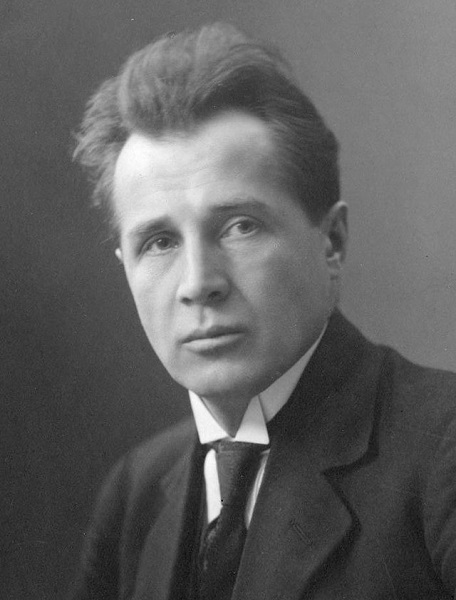
MADETOJA, Leevi

Born in Oulu, Feb 17, 1887
Died in Helsinki, Oct 6, 1947

  • Leevi Madetoja (pronounced “Leh-vi Mah-det-oya”) was a Finnish composer, educator, and music critic who followed in the footsteps of Jean Sibelius in leading the Finnish national Romantic school.
  • Madetoja studied at the music institute in Helsinki under Sibelius, followed by a period of study in Paris under Vincent d’Indy and in Vienna/ Berlin under Robert Fuchs.6

Biography

Categories
Contemporary Finnish

MÄNTYJÄRVI, Jaakko

Born in Turku, Finland, 1963

  • Jaakko Mäntyjärvi [PRONUNCIATION] is a classical composer of primarily choral music, as well as a professional translator.
  • As a composer, Mäntyjärvi describes himself as an eclectic traditionalist: he adopts influences from a number of styles and periods, and his musical language is based on an awareness of tradition, continuity, and communicativeness.
  • Mäntyjärvi is an active choral singer, which is why much of his compositional inspiration falls into the choral genre.1

Learn More
Composer’s Website

Sources

  1. Jaakko Mäntyjärvi, “CV (EN),” Jaakko Mäntyjärvi, accessed February 26, 2025, http://www.jaakkomantyjarvi.fi/CVEN.html.

Pieces

Four Shakespeare Songs

Categories
Late Romantic (~1860 – 1920) Finnish

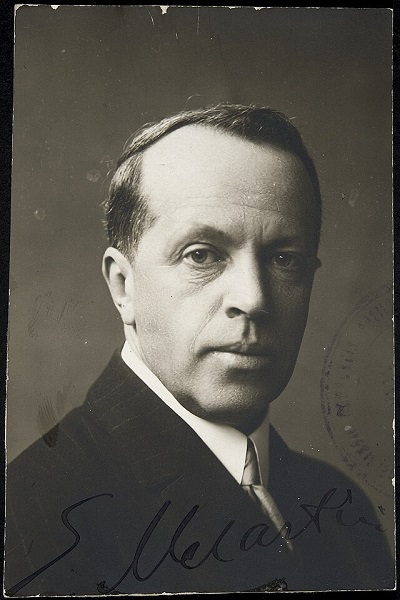
MELARTIN, Erkki

Born in Käkisalmi, Finland [now Priozersk, Russia], Feb 7, 1875
Died in Pukinmäki, Helsinki, Feb 14, 1937

  • Erkki Melartin (pronunciation) studied at the Helsinki Music School with Martin Wegelius (1892–9) and in Vienna with Robert Fuchs.
  • Melartin went on to serve as director of the Helsinki Music School from 1911–36, where he “raised an entire generation of composers as a teacher, and supported young modernists.”
  • As a composer, Melartin was incredibly prolific, and his extensive output includes six symphonies (in addition to several more pieces for orchestra), stage works, chamber music, art songs, choral pieces, piano works, and more.
    • Melartin’s music is rooted in the Late Romantic idiom while experimenting with the newer Impressionist and Expressionist styles.
    • Largely overshadowed by his Finnish contemporary, Jean Sibelius, Melartin was writing symphonies around the same time as Sibelius and maintained a distinctive style and musical voice throughout.7

Learn More

Short biography from Fennica Gehrman

Pieces


Categories
20th Century Finnish

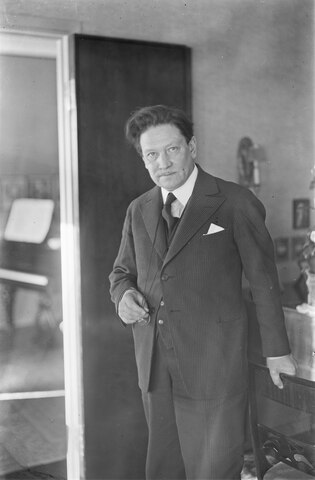
PALMGREN, Selim

Born in Björneborg [now Pori], Feb 16, 1878
Died in Helsinki, Dec 16, 1951

[PRONUNCIATION | SEH-lim PALM-gren]

  • Selim Palmgren was a composer, conductor, and pianist best known for his works for the keyboard instrument.
  • Palmgren received his formal education at the Helsinki Music Institute, followed by studies in Germany and Italy. Once back in Finland, Palmgren worked as a conductor for about a decade, after which he devoted his career to composing and piano performance.
  • In the early 1920s, Palmgren toured the U.S., and in 1923, he began teaching composition at the Eastman School. He later became a professor of harmony and composition at the Sibelius Academy, Helsinki.8
  • As a pianist, Palmgren regularly accompanied his wife, Maikki Pakarinen, who was a Finnish operatic soprano.9
  • Palmgren’s music has not withstood the test of time well, partly because the composer did little to promote his own work, and partly because many of his works are undated and remain in manuscript.10
Categories
20th Century Contemporary Finnish

RAUTAVAARA, Einojuhani

Born in Helsinki, 9 Oct, 1928
Died in Helsinki, 27 July, 2016

[PRONUNCIATION / AY-no-yu-hah-ni ROW-ta-vah-ra]

  • Einojuhani Rautavaara began studying music in his teens, earning a place Helsinki University for musicology and the Sibelius Academy for composition.
    •  In 1955, Jean Sibelius selected Rautavaara for a scholarship to study in the United States. Rautavaara spent two years studying with Vincent Persichetti at Juilliard. He also took part in the summer courses at Tanglewood given by Roger Sessions and Aaron Copland.11
  • As a composer, Rautavaara cycled through several styles throughout his long career. In the 1950s, his music is most often characterized by neoclassical elements, while the 60s brought a shift toward the avant-garde and experiments in 12-tone techniques. In the 70s, the composer embraced Romanticism, ultimately reaching his final “mystical” phase with music featuring angels.12
  • Rautavaara was quite prolific, writing eight symphonies, nine operas, 12 instrumental (and one choral) concertos, chamber music, choral music, and vocal works.13

Learn More
Short biography

Pieces


Categories
20th Century Late Romantic (~1860 – 1920) Finnish

SIBELIUS, Jean

Born in Hämeenlinna, Dec 8, 1865
Died in Järvenpää, Sept 20, 1957

Biography from the Swedish Finn Historical Society