Categories
20th Century Russian

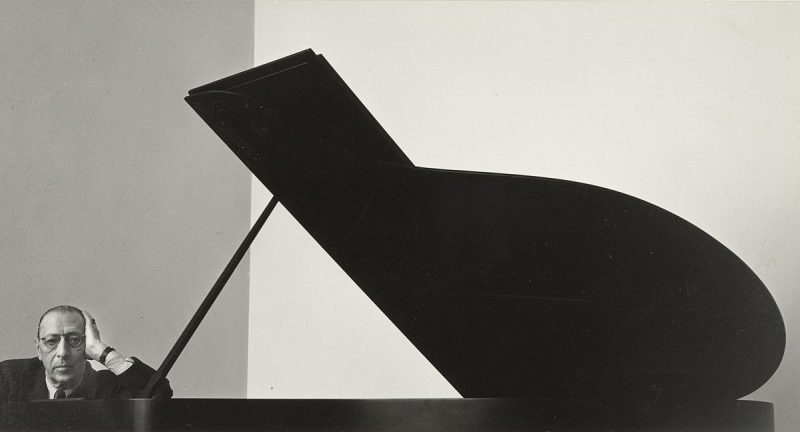
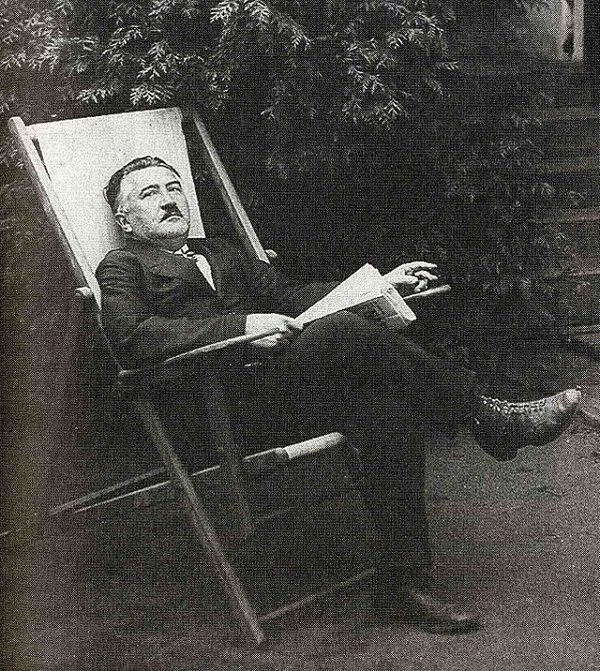
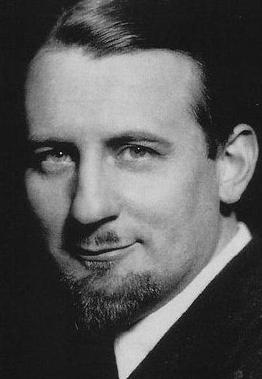
STRAVINSKY, Igor

Born in Oranienbaum [now Lomonosov], near St Petersburg, 5/June 17, 1882
Died in New York, April 6, 19711

Biography

Categories
20th Century American

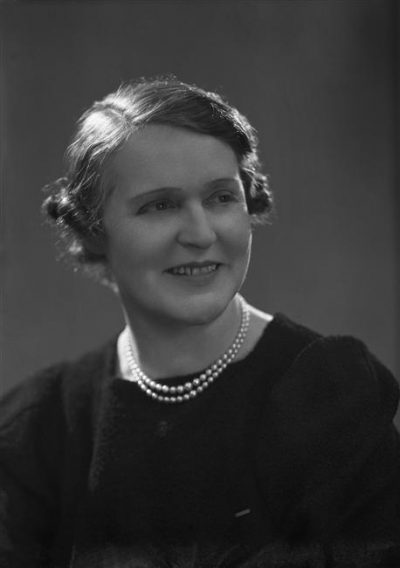
STRICKLAND, Lily

Born in Anderson, SC, Jan 28, 1887
Died in Hendersonville, NC, June 6, 1958

  • Lily Strickland completed her formal training at the Institute of Musical Art in New York (now Julliard).
  • As a composer, Strickland was consistently inspired by the music of diverse cultures throughout her career.
    • Earlier on, she was influenced by Black musical traditions and Native American melodies.
    • From 1920-29, Strickland lived in India, where she soon became fascinated with non-Western idioms.
    • *Note from Rebecca – I would recommend treading lightly when playing some of Strickland’s pieces. Though she studied the music of these diverse cultures to varying degrees, I can also see arguments made regarding cultural appropriation of these musical traditions.
  • Strickland wrote about 400 pieces, including operettas, piano pieces, and songs, “Mah Lindy Lou” being the most popular among them.2
  • In addition to music, Strickland was also a writer, poet, and painter. She wrote numerous scholarly cultural articles, wrote the lyrics to her songs (in addition to standalone sonnets), and painted cover illustrations for many of her compositions.3

Learn more:

Biography (written by the son of Strickland’s first cousin)
Short biography from the South Carolina Encyclopedia

Pieces


Categories
20th Century Late Romantic (~1860 – 1920) Czech

SUK, Josef

Born in Křečovice, Jan 4, 1874
Died in Benešov, nr Prague, May 29, 1935

  • Josef Suk was the child of a choirmaster/ schoolmaster, from whom he learned to play piano, violin, and organ. In 1885 (age 11), Suk entered the Prague Conservatory. He stayed on an extra year after graduation to study composition with Antonín Dvořák, becoming the composer’s favorite pupil.
    • Fun fact: in 1898, Suk married Dvořák’s daughter, Otilie (Otilka).
    • In 1922, Suk himself became a professor of composition at the Prague Conservatory.
  • As a composer, Suk was most at home with instrumental music. He was seen by many as Dvořák’s musical successor. His earlier works display qualities of sensuous late romanticism. Following the deaths of his father-in-law in 1904 and his wife in 1905, Suk’s music took a dramatic turn towards more complexity, introspection, and even polytonality.
  • Unlike many of his Czech predecessors, Suk almost never drew on folk music or literary sources for inspiration.
  • In addition to composition, Suk led a distinguished international career as a violinist in the Czech Quartet until he retired from performing in 1933.4

Learn More

Biography from Seattle Chamber Music Society

Categories
20th Century French

TAILLEFERRE, Germaine

Born in Parc-St-Maur, near Paris, April 19, 1892 
Died in Paris, Nov 7, 1983 

  • Tailleferre was a piano prodigy as well as a composer. She studied at the Paris Conservatory, where she met future fellow-members of Les Six: Auric, Honegger and Milhaud. 
  • Erik Satie discovered Tailleferre’s  Jeux de plein air in 1917, and he loved it so much that he called Tailleferre his “musical daughter” and promoted her career. 
  • Tailleferre was the only woman composer in the early 20th-century group of French composers known as Les Six. She appears in the lower left-hand corner of this famous group portrait of Les Six
  • Tailleferre’s works include comic operas, radio and film scores, incidental music, orchestral music, chamber music, songs, and a number of works for children.5

Biography from Wise Music Classical 

Categories
20th Century Japanese

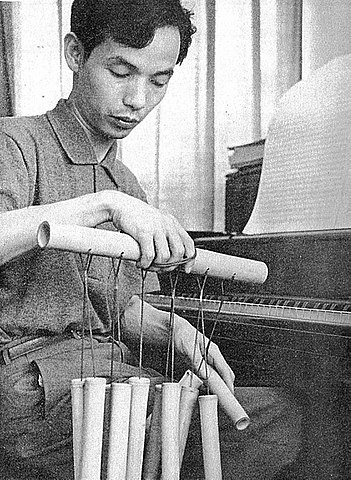
TAKEMITSU, Tōru

Born in Tokyo, Oct 8, 1930 
Died in Tokyo, Feb 20, 1996

  • Takemitsu was an innovative, mostly self-taught Japanese composer whose music blends modernist Western styles Japanese traditional music and instruments. 
  • Takemitsu’s first encounter with Western music came while he was serving as a conscripted member of the Japanese military in WWII: his officer played a recording of a French popular song for a group of conscripts. French music would go on to be a huge influence for Takemitsu, especially the music of Debussy and Messaien
  • In the 1950s, Takemitsu and several other composers formed a group called Jikken Kōbō (Experimental Workshop) to explore avant-garde multimedia projects. 
  • Takemitsu’s music began to find audiences outside Japan when Stravinksy heard his Requiem for Strings (composed 1957) in 1959, and declared it a masterpiece. 
  • Takemitsu was also an influential essayist and writer on music.1 

Profile on Takemitsu from Schott Music 

Guide to Takemitsu’s music from The Guardian 

Sources

  1. Yoko Narazaki and Masakata Kanazawa, “Takemitsu, Tōru,” Grove Music Online (20010, accessed November 17, 2021, https://www.oxfordmusiconline.com/grovemusic/view/10.1093/gmo/9781561592630.001.0001/omo-9781561592630-e-0000027403.

Pieces

Toward the Sea II

Bad Boy for Two Guitars

Categories
20th Century English

TAVENER, Sir John

BBorn in London, Jan 28, 1944
Died in Dorset, Nov 12, 2013

  • Tavener studied at the Royal Academy of Music, where his teachers included Lennox Berkeley
  • Tavener’s early style is deeply influenced by Messiaen and late Stravinsky (especially Stravinsky’s religious works). After his conversion to the Orthodox Church in the late 1970s, Orthodox liturgical music became a strong influence in his compositions. 
  • Fun fact: Tavener’s early experimental cantata The Whale caught the interest of the Beatles, and it was recorded on their Apple record label. 1

Sources

  1.  Ivan Moody, “Tavener, Sir John,” Grove Music Online (2001), accessed September 30, 2021,  https://www.oxfordmusiconline.com/grovemusic/view/10.1093/gmo/9781561592630.001.0001/omo-9781561592630-e-0000027569

Pieces


Categories
20th Century Greek

THEODORAKIS, Mikis

Born on Chios, Greece, July 29, 1925
Died in Athens, Sept 2, 2021

  • Theodorakis studied at the Athens Conservatory, followed by the Paris Conservatory under Olivier Messiaen and Eugène Bigot.
  • As a composer, Theodorakis wrote symphonies, opera, chamber works, choral works, ballets, songs, and film scores. Within Greece, he is beloved for his contribution to art song (we wrote over 1,000!), and on an international level, he is best known for his film scores (most notably, Zorba the Greek).
  • Theodorakis was actively involved in politics for all of his adult life.
    • During the Greek Civil War, the composer was arrested, exiled, tortured, and barely escaped with his life. However, it was also during this harrowing period that he began writing his first symphony.
    • Theodorakis served in the Greek parliament several times as a representative for the Communist Party. During the military coup d’état of 21 April 1967, Theodorakis was arrested and imprisoned (where he continued to compose). Thanks to pressure from famous artists around the world, including Shostakovich, Arthur Miller, and Laurence Olivier, Theodorakis was eventually released in 1970. 6

“His Marxist background and the physical and mental pain he and his fellow leftists had suffered during the Greek civil war gave Theodorakis a sense of moral purpose which infused all his work.”7

Grove Music Online

Learn More

Obituary from The Guardian

Pieces


Categories
20th Century American

THOMPSON, Randall

Born in New York, NY, April 21, 1899 
Died in Cambridge, MA, July 9, 1984 

  • Thompson’s teachers included Ernest Bloch and Francesco Malipiero. He won a Prix de Rome in 1922.8
  • When he was a student at Harvard, Thompson was failed his audition for the Glee Club. Regarding this rejection, Thompson said, “My life has been an attempt to strike back.”9
  • Thompson had a long and distinguished teaching career, at institutions including UC Berkeley, the Julliard School (where he taught Leonard Bernstein), and Harvard University.10
  • Thompson is best known for his choral works, which include both sacred and secular motets and cantatas, a Requiem, and a Mass. His choral music is often influenced by historical styles, ranging from Renaissance polyphony to American shape-note singing. His oeuvre also includes three symphonies, a radio opera and chamber works.11

Biography from ECS Publishing 

Pieces


Categories
20th Century American

THOMSON, Virgil

Born in Kansas City, MO, Nov 25, 1896 
Died in New York, NY, Sept 30, 1989 

  • In addition to composing, Thomson was an influential and accessible music critic. For many years he was the chief music critic at the New York Herald Tribune. 
  • Thomson was educated at Harvard and also spent time in Paris in the 1920s, where he met Satie, hobnobbed with Les Six and took composition lessons with Nadia Boulanger. He also met Gertrude Stein, who became a good friend and collaborator (he set her texts multiple times, including collaborating on two operas). 
  • Thomson’s mature musical style combines influences from American hymns, 19th-century dance, and traditional tonality with a dash of diatonic dissonance and polytonality.11

Composer website from the Virgil Thompson Foundation 

Categories
Late Romantic (~1860 – 1920) Estonian

TOBIAS, Rudolf

Born in Käina, Hiiumaa Island, May 29, 1873
Died in Berlin, Oct 29, 191812

  • Rudolf Tobias was an extremely important figure in the founding of an Estonian classical music tradition. His “Julius Caesar” Overture is considered to be a foundational symphonic work in the emergence of a distinct classical music culture in the country.13 
  • Tobias’s compositional output includes works for orchestra, chamber ensemble, choir, solo piano and organ, and solo voice.14

Biography (translated)

Categories
20th Century English

TOMLINSON, Ernest

Born in Rawtenstall, Sept 19, 1924
Died in Lancashire, June 12, 201515

Biography

Pieces


Categories
20th Century Estonian

TORMIS, Veljo

Born in Kuusalu, near Tallinn, Estonia, 7 Aug 1930
Died in Tallinn, 21 Jan 2017

[PRONUNCIATION | VEHL-yoh TOR-mees]

  • Veljo Tormis almost exclusively wrote for voice, including choral works, songs/ song cycles, and opera, as well as a small number of instrumental works. According to his biography, for Tormis, “music begins with words.” Many of his works are based on ancient Estonian folk songs, as well as on the music of other Finno-Ugric peoples.
  • Tallinn came from a family of amateur musicians. At 12 years old, he was accepted at the music conservatory in Tallinn. A few years later, he continued his studies at the Moscow Conservatory.16
  • Since the fall of the Soviet Union, Tormis’s works have become better known and performed more frequently in the West.
  • Fun fact – Early on in his career, Tormis taught at the Tallinn Music School, and Arvo Pärt was one of his students.

Learn More
Composer’s website

Pieces


Categories
20th Century Contemporary American

TOWER, Joan

Born in New Rochelle, NY, Sept 6, 1938 

  • Tower studied composition at Bennington College and Columbia University. She has taught at Bard College since 1972.17
  • Tower’s early works were serialist (influences included Milton Babbit), but since 1976 her work has moved in a more tonal direction.18
  • Major honors include a Guggenheim Fellowship (1977), acknowledgement at the 2009 Kennedy Center Gala for Women in the Arts,19 and a Grammy award for her one-movement symphonic work Made in America (2008).20

Faculty biography from Bard College 

Biography from Wise Music Classical 

Categories
20th Century Spanish

TURINA, Joaquín

Born in Seville, Dec 9, 1882
Died in Madrid, Jan 14, 1949

  • Joaquín Turina was a Spanish composer and pianist who was a contemporary (and friend) of Manuel de Falla, who both followed in the footsteps of Albéniz and Granados regarding their substantial enrichment of Spanish classical music around the turn of the century.
    • *This isn’t to say that these four composers were alike musically, but rather all played an essential role in developing 20th-century Spanish music in their own unique way.
  • In 1905, Turina moved to Paris to study piano with Moritz Moszkowski and composition with Vincent d’Indy.
  • As a composer, Turina wrote across multiple genres, including orchestral music, chamber music, songs, piano pieces, and works for stage. His music is infused with his Andalusian roots, while his time spent in France also significantly colored his writing. Compared to his Spanish contemporaries, Turina was the most driven to write European music in the conventional major forms.
    • For example/ Fun fact – Turina was the only one of the four major 20th-century Spanish composers mentioned above to write a symphony (Sinfonía sevillana).18

Learn More

Biography from Hyperion Records

Pieces


Categories
20th Century English

VAUGHAN WILLIAMS, Ralph

Born in Down Ampney, Gloucs., Oct 12, 1872
Died in London, Aug 26, 195819

“[Vaughan Williams] was a composer of great originality who was nevertheless perennially curious about the music of others.”20

Biography from the Vaughan Williams Society

Categories
20th Century Brazilian

VILLA-LOBOS, Heitor

Born in Rio de Janeiro, March 5, 1887
Died in Rio de Janeiro, Nov 17, 195921

  • Villa-Lobos had a highly successful international career as a composer and was incredibly prolific in his 6+ decades of writing music.
  • He received his initial musical training from his father, who was adamant about exposing Villa-Lobos to a wide variety of classical music during his upbringing; however, it was Brazil’s popular idioms that intrigued Villa-Lobos the most during his youth. These idioms would heavily influence the formation of Villa-Lobos’s compositional voice going forward.
  • As a composer, Villa-Lobos was essentially self-taught and endlessly curious about the everchanging musical landscape at the turn of the century and beyond. Consequently, his music embodies a wide variety of experiments in style and language.22  

Biography from Naxos

Categories
20th Century English

VINTER, Gilbert

Born in Lincoln, May 4th, 1909
Died in Tintagel, Oct 10th, 1969

  • Gilbert Vinter was a composer, conductor, bassoonist, and educator. He was best known for his works for brass and military band.
  • As a child, Vinter worked his way up to head chorister at Lincoln Cathedral. He subsequently studied bassoon and composition at the Royal Academy of Music.
    • Vinter would also later teach at the institution.23

Biography from the Lincoln School (where Vinter was an alumnus)

Categories
20th Century American

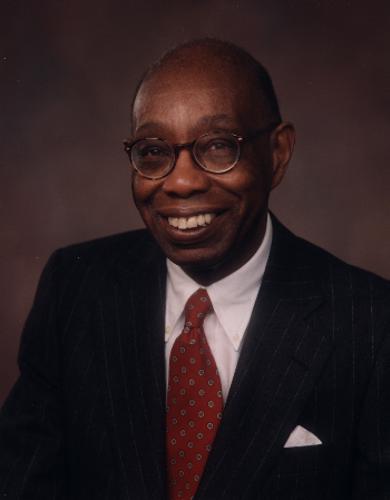
WALKER, George

Born in Washington, DC, June 27, 1922 
Died in Montclair, NJ, Aug 23, 2018 

  • Walker studied at Oberlin, Eastman, and Curtis. His teachers included Nadia BoulangerRudolf Serkin, and Robert Casadesus.1
    • Walker began studying at Oberlin at the age of 14, becoming the institution’s youngest student.
    • Walker was also the first Black student to earn a doctorate at Eastman in 1956.2
  • Walker had a distinguished academic career; his longest appointment was at Rutgers University from 1969-92.3
    • The stability Walker found in academia paved the way for greater capacity to compose. However, it came at a cost. He had originally pursued a career as a concert pianist but found consistent work too hard to come by due to institutional racism.4
  • Among his many professional honors, George Walker was the first African-American composer to win the Pulitzer Prize for music in 1996 for his vocal and orchestral piece Lilacs.5
  • As a composer, Walker wrote most extensively for string instruments, though his oeuvre also includes concertos for trombone and piano, piano sonatas, sinfonias, brass and wind quintets, song cycles, and more.
  • Walker cannot easily be associated with other composers because his music is so distinctive. He wrote each piece to be unique, without any resemblance to a previous work.
    • He also frequently quoted spirituals, Jazz, and folk music in his works, but only with incredible subtlety.6

Learn More

Obituary article from NPR

Sources

  1. Guthrie P. Ramsey, “Walker, George,” Grove Music Online (2001), accessed August 12, 2021, https://www.oxfordmusiconline.com/grovemusic/view/10.1093/gmo/9781561592630.001.0001/omo-9781561592630-e-0000029829
  2. Elizabeth de Brito, “Composer of the Week: George Walker,” BBC Music Magazine Vol. 30, No. 10 (2022), 60-63.
  3. Guthrie P. Ramsey, “Walker, George,” Grove Music Online.
  4. Elizabeth de Brito, “Composer of the Week: George Walker,” BBC Music Magazine.
  5. “Biographical Information,” George Walker, accessed August 12, 2021, http://georgetwalker.com/bio.html. 
  6. Elizabeth de Brito, “Composer of the Week: George Walker,” BBC Music Magazine.
Categories
20th Century English

WALTON, Sir William

Born in Oldham, March 29, 1902
Died in Ischia, March 8, 198324

Biography from Boosey & Hawkes

Categories
20th Century Late Romantic (~1860 – 1920) English

WARLOCK, Peter

Born in London, Oct 30, 1894
Died in London, Dec 17, 19301

“Peter Warlock” was a pseudonymn. He was born Philip Arnold Heseltine.

Biography from Boosey & Hawkes

Sources

Barry Smith, “Warlock, Peter,” Grove Music Online (2001), accessed February 23, 2021, https://www.oxfordmusiconline.com/grovemusic/view/10.1093/gmo/9781561592630.001.0001/omo-9781561592630-e-0000029912.

Categories
20th Century German

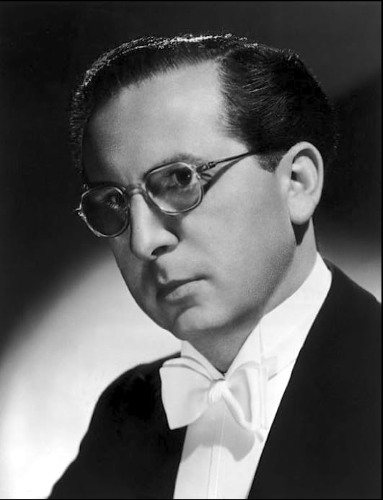
WAXMAN, Franz

Born in Chorzów, Poland, Dec 24, 1906
Died in Los Angeles, Feb 24, 1967

  • Franz Waxman is best remembered today for his contributions to film scores. He won two Academy Awards, one for Sunset Boulevard (1950) and one for A Place in the Sun.
    • Other notable film scores include Bride of Frankenstein (1935), and Rear Window (1954), among may others. Find the complete list on Waxman’s IMDB page.
    • Bride of Frankenstein was Waxman’s first Hollywood film and kickstarted his career in the industry.
  • As a champion of contemporary classical music, Waxman founded the Los Angeles International Music Festival in 1947. The festival premiered works by Stravinsky, Vaughan Williams, Shostakovich, Schoenberg, and more.25

Learn More
Composer’s website

Categories
20th Century Modernist (~1890– ) Austrian

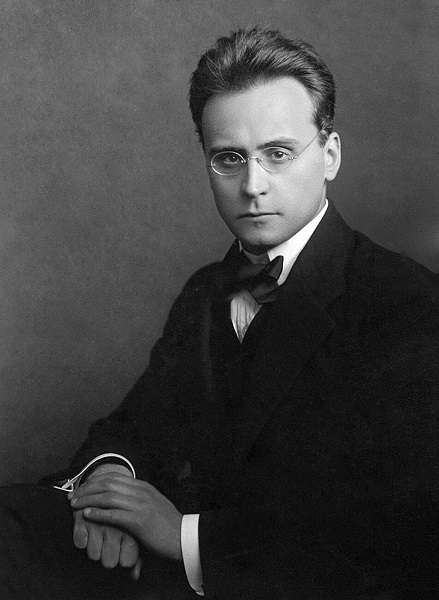
WEBERN, Anton

Born in Vienna, Dec 3, 1883
Died in Mittersill, Sept 15, 19451

Short biography
More extended biography

Sources

  1. Kathryn Bailey Puffett, “Webern, Anton,” Grove Music Online (2015), accessed September 2, 2022, https://www.oxfordmusiconline.com/grovemusic/view/10.1093/gmo/9781561592630.001.0001/omo-9781561592630-e-0000029993.

Pieces

Five Pieces for Orchestra, Op. 10

Categories
20th Century American German

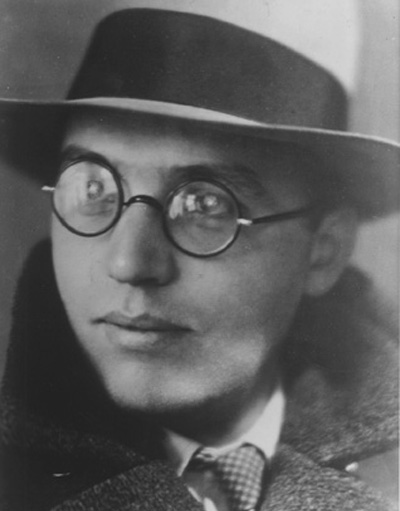
WEILL, Kurt

Born in Dessau, Germany, March 2, 1900
Died in New York, April 3, 1950

  • Kurt Weill [pronounced “vile”] began composing at a young age and was arranging family concerts of his own works by the time he was 12 years old.
    • Fun fact – Weill’s family had lived in Germany since the 14th century.26
  • For a brief period of time, Weill was enrolled at the Berlin Hochschule für Musik, where he had occasional sessions with Engelbert Humperdinck. Weill eventually took up composition lessons more successfully with Ferruccio Busoni.
  • Weill’s initial rise to fame took place in the mid-1920s with the premieres of his first two operas, Der Protagonist and Royal Palace. Around this same time, Weill met Bertolt Brecht, who would become an important collaborator for the composer. Their first joint work was the “songspiel,” The Rise and Fall of the City of Mahagonny.
  • In 1933, Weill was forced to flee Nazi Germany and moved to Paris, then London, and finally to New York in 1935, where he lived for the rest of his life. His music has been categorized into two periods related to this move, the more dissonant and confrontational “first period” taking place during his time in Germany, and his more lyrical, appeasing “second period” taking place when he was living in America.
    • Weill’s music for the stage was revolutionary in that he did not acknowledge a difference between opera and musical theater. He combined classical traditions and popular music genres in his works and displayed remarkable versatility.
  • Weill was married to Austrian-born actress and singer Lotte Lenya, who performed many of Weill’s works.27

Learn More
The Life & Career of Kurt Weill – Timeline via the Kurt Weill Foundation for Music

Short biography via the Kurt Weill Foundation for Music

Categories
20th Century Polish Russian

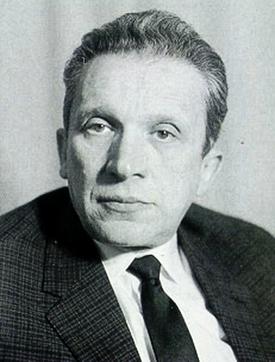
WEINBERG, Mieczysław

Born in Warsaw, Dec 8, 1919 
Died in Moscow, Feb 2, 1996 

Pronunciation 

IPA:[mjɛtʃiswɑv vaɪnbɛrg] 

Phonetic: MYEH-chee-swav VINE-berg

Pronunciation via Forvo

Alternate Names 

There are various versions of this composer’s name in use. Because he was born in Poland and worked in Russia, his name has been transliterated in several ways. Additionally, when he arrived in Russia as a refugee from Poland, a Russian border guard decided to rename him Moishe (a stereotypically Jewish name) instead of Mieczysław.1

If you’re having trouble finding him in search engines, also try these spellings/versions: 

Moisey Samuilovich Vaynberg (Oxford Music Online uses this one) 

Moishe Vainberg 

Mojsze Wajnberg 

His wikipedia article also has the Hebrew and Cyrillic versions if you’re interested. 

Biography

  • Weinberg was a Polish-born Jewish composer who spent most of his career in Russia.2
  • Weinberg fled Warsaw in 1939 upon the Nazi invasion of Poland and ended up in Minsk. Tragically, the family he left behind ultimately perished in a Nazi concentration camp.
  • Weinberg was a huge admirer of Shostakovich and his music, and the older composer ended up playing a pivotal role in Weinberg’s entry into Russia in 1943 (where he would spend the rest of his life).
    • Weinberg sent Shostakovich the score for his First Symphony (1942), and the latter was so impressed that he urged Soviet officials to permit Weinberg to emigrate to Moscow. The two composers became close friends thereafter.
  • Weinberg’s music written in the 1940s is characterized by an abrasive neo-classical style, while his works post-war were more simplified (as many composers were inclined to do in light of the political climate) and drew on folk idioms from his Jewish heritage.
  • Weinberg was affected by the growing Anti-Semitism under Stalin and was even imprisoned in 1953 under trumped-up charges for “promoting bourgeois Jewish nationalism.” Thanks to Stalin’s conveniently timed death and the intervention of his friend, Shostakovich, Weinberg was eventually released.
  • While Weinberg was an extremely prolific composer, his music was relatively unknown outside of Russia until the fall of the Berlin Wall.3

Scholarly website/database on Weinberg 

Sources

  1. Richard Taruskin, Russian Music at Home and Abroad: New Essays (Oakland, CA: University of California Press, 2016), 281.
  2. Boris Schwarz and Laurel Fay, “Vaynberg [Weinberg], Moisey Samuilovich,” Grove Music Online (2002), accessed January 12, 2024, https://www.oxfordmusiconline.com/grovemusic/view/10.1093/gmo/9781561592630.001.0001/omo-9781561592630-e-5000006759.
  3. Erik Levi, “Composer of the Month: Mieczyslaw Weinberg,” BBC Music Magazine Vol. 27, No. 13 (2019), 76-80.

Pieces

Symphony No. 2, Op. 30

Categories
20th Century American Czech

WEINBERGER, Jaromír

Born in Prague, Jan 8, 1896
Died in St Petersburg, FL, Aug 8, 196728

Biography

Pieces


Categories
20th Century American

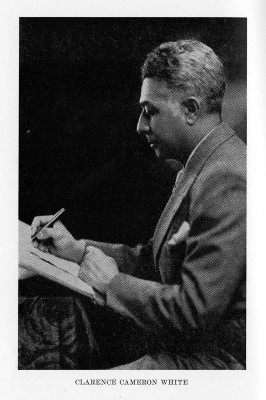
WHITE, Clarence Cameron

Born in Clarksville, TN, Aug 10, 1880 
New York, June 30, 1960 

  • White was an African-American composer and violinist. 
  • White studied at Oberlin and in Europe, where his teachers included Samuel Coleridge-Taylor. 
  • White toured frequently as a violinist, with his wife, collaborative pianist Beatrice Warrick White. 
  • White taught at West Virginia State College and was the Director of Music at the the Hampton Institute in Virginia.29

Biography from the Library of Congress 

Biography from The African American Registry

Categories
20th Century English

WHITLOCK, Percy

Born in Chatham, June 1, 1903
Died in Bournemouth, May 1, 1946

  • Percy Whitlock was an English organist and composer, best known during his lifetime as a recitalist and broadcaster.
  • As a student at the Royal College of Music, Whitlock studied composition under Ralph Vaughan Williams and organ under Henry Ley.
  • Whitlock was assistant organist at Rochester Cathedral between 1921 and 1930, followed by music director of St. Stephen’s in Bournemouth. In 1932, Whitlock became organist at Bournemouth’s Municipal Pavilion, where he played until his death.30
  • As a composer, Whitlock’s works largely consist of church and organ music, with a handful of orchestral pieces, including a symphony for organ and orchestra.

Characteristically, [Whitlock] has that all too uncommon knack of writing memorable tunes, melodies that are perpetually evolving, undergoing transformation, and are supported by a harmonic and contrapuntal idiom that had infiltrated the national scene at the turn of the century.31

Categories
20th Century Swedish

WIRÉN, Dag

Born in Striberg, Närke, Oct 15, 1905
Died in Stockholm, April 19, 198632

Biography

Name pronunciation:
[dɔg viɾ’in]
“dawg vee-REEN”
Listen

Categories
20th Century Late Romantic (~1860 – 1920) Italian

WOLF-FERRARI, Ermanno

Born in Venice, Jan 12, 1876
Died in Venice, Jan 21, 194833

Biography

Pieces


Categories
20th Century Chinese

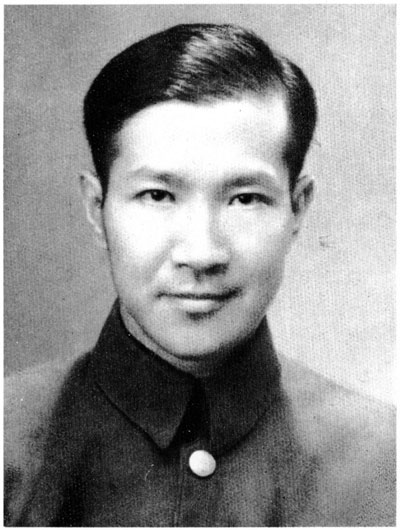
XIAN Xinghai

Born in Macao, June 13, 1905
Died in Moscow, Oct 30, 1945

Note that Xian is the composer’s surname. It is appropriate to refer to him as Xian Xinghai or Xian, not just Xinghai.

Pronunciation

  • Xian studied at multiple Chinese conservatories, and also studied in France with d’Indy and Dukas.
  • Xian was associated with the Communist party’s reformist or revolutionary school of composers, who emphasized nationalistic compositions and the use of Chinese folk music, rather than imitation of Western music.
  • In the late 30s Xian was head of music at the Lu Xun College of the Arts. From 1940 until his death in 1945, he was based in the Soviet Union.34

Biography from the Cultural Institute of Macao

Categories
20th Century Japanese

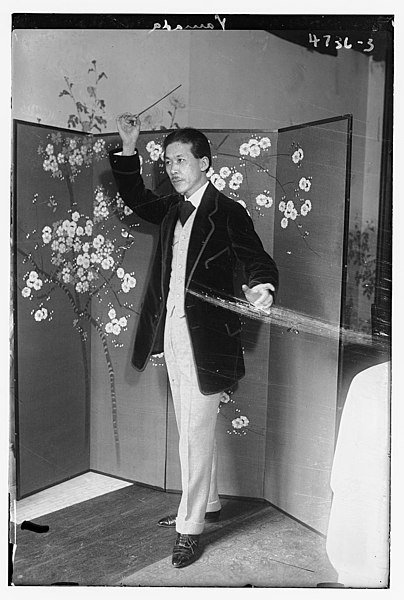
YAMADA, Kōsaku

Born in Tokyo, June 9, 1886 
Died in Tokyo, Dec 29, 1965 

  • Yamada was a Japanese composer, orchestral conductor, and educator.
  • Yamada attended at the Tokyo Music School, and then studied composition at the Hochschule für Musik in Berlin. His music shows a significant influence from late German romanticism. 
  • After his studies in Germany, Yamada sometimes used the somewhat Germanic name of Kósçak as a variation of his Japanese given name, Kōsaku.35
  • Yamada founded the Tokyo Philharmonic Society Orchestra (which is a different organization than that which current operates under that same name) and directed this ensemble in Japan’s first-ever professional classical orchestral concert in 1915. In addition to his work in Japan, Yamada’s conducting career also took him abroad, including conducting a concert of his compositions at Carnegie Hall in 1918. 
  • Yamada composed more than 1600 works, including operas, tone poems, songs, and chamber works. As a composer, he was particularly interested in finding a musical language well suited to the rhythms of the Japanese language.  
  • Tragically, a large number of Yamada’s compositions were destroyed in the air raid that targeted Tokyo on May 25, 1945.36

Short biography from Naxos 

Categories
20th Century Japanese

YOCOH, Yuquijiro

Born in Hita City, Japan, 1925 
Died in 2009 

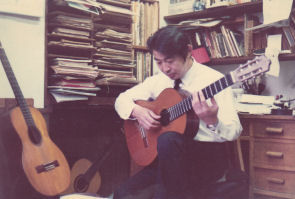
  • Yocoh is a Japanese guitarist and arranger best known for his set of variations on the folk tune Sakura.37

The composer’s website is in Japanese, but it contains some fascinating photos of the composer over the course of his life.  

I have run his bio through Google Translate and derived the following information. Please take it with a grain of salt, because I do not know Japanese – however, Yocoh’s site is by far the most thorough source of information available about him online.

  • Yocoh reports that he met Segovia during the guitarist’s visit to Japan in 1959. He also writes that Segovia’s performance in Japan, the first of a classical guitarist in that country since WWII, was an influential experience for him. He says he worked on learning Spanish just so he could speak with Segovia. 
  • Yocoh’s most famous work, his set variations on Sakura, has been recorded by a plethora of classical guitarists, including John Williams and Angel Romero. 
  • Yocoh writes that in addition to composing, he enjoys arranging preexisting classical works for the guitar, and that he values the artistic satisfaction of creating handwritten music manuscripts. 
Categories
Late Romantic (~1860 – 1920) Belgian

YSAŸE, Eugène

Born in Liège, July 16, 1858
Died in Brussels, May 12, 1931

[EU-zhen ee-zah-EE]

  • Eugène Ysaÿe was a revered virtuoso violinist, composer, and conductor.
  • Ysaÿe was the dedicatee of many violin works by his contemporaries, including Franck’s Violin Sonata in A Major, Chausson’s Concert for Violin, Piano and String Quartet and Poème, and d’Indy’s String Quartet No. 1 (among others).38
    • As a performer, Ysaÿe championed the works of his contemporaries – over 50 works were written specifically for him to perform.39
  • Fun fact – Ysaÿe never received formal training in composition.
    • Ysaÿe’s most well-known compositions are his Six Sonatas for Violin Solo, each one written for a famous violinist of the time: Joseph Szigeti, Jacques Thibaud, Georges Enescu, Fritz Kreisler, Mathieu Crickboom, and Manuel Quiroga.
  • As a conductor, Ysaÿe led an orchestra in Berlin that later became the Berlin Philharmonic. Later in life, Ysaÿe also led the Cincinnati Symphony Orchestra.
    • As his health declined in the last couple of decades of his life, Ysaÿe prioritized conducting and composing over performing.40
  • In addition to performing, composing, and conducting, Ysaÿe served as professor of violin at the Brussels Conservatory for over a decade.41

Learn More
Biography via Interlude

Pieces


Categories
Late Romantic (~1860 – 1920) Austrian

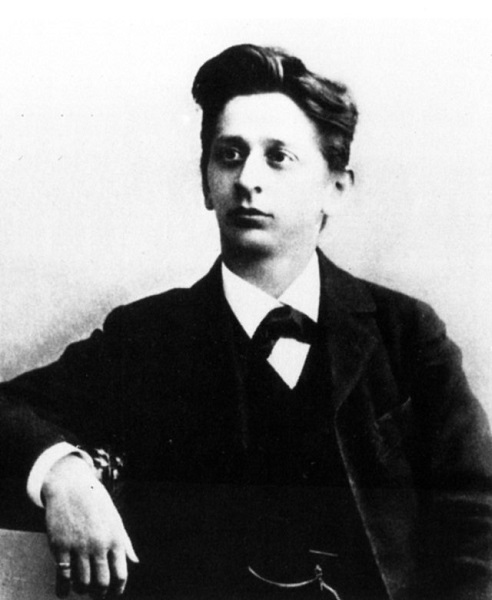
ZEMLINSKY, Alexander

Born in Vienna, Oct 14, 1871
Died in Larchmont, NY, March 15, 1942

  • Alexander Zemlinsky was a composer, conductor, and educator whose contributions to classical music at the turn of the century have largely been overshadowed by his Austrian contemporaries.
  • The composer’s earlier works reflect the influence of Brahms and Wagner. Coincidentally, one of Zemlinsky’s earliest advocates was Johannes Brahms, who was impressed by the young composer’s music.
  • Unlike his contemporaries of the Second Viennese School, Zemlinsky rejected atonality. Rather, his music is known for its emotional intensity.
  • Zemlinsky had a lifelong friendship with Arnold Schoenberg. The two met in 1895 when Schoenberg joined an amateur orchestra that Zemlinsky was conducting at the time called the Polyhymnia. Zemlinsky would go on to instruct Schoenberg in composition. And in 1901, Schoenberg married Zemlinsky’s sister, making the two brothers-in-law.
  • Fun fact – Zelminsky was involved in a passionate love affair with Alma Schindler, one of his composition students, shortly before she married Gustav Mahler.42

Biography

Categories
20th Century Ukrainian

ZHUK, Alexander

Born in 1907
Died in 1995

  • Alexander Zhuk was a Kharkiv composer, conductor, and educator.43