Categories
Classical (~1750–1820) Italian

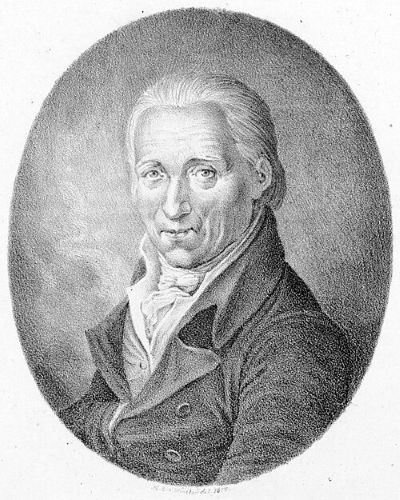
SALIERI, Antonio

Born in Legnago, Aug 18, 1750
Died in Vienna, May 7, 1825

  • Salieri spent most of his career in Vienna, where he was a major arbiter of musical style.

Salieri “could bind all the power of German music to the sweet Italian style.”

A Classical-era critic, on Salieri 1

Short biography

Categories
Classical (~1750–1820) German

SALOMON, Johann Peter

Born in Bonn, baptized Feb 20, 1745
Died in London, Nov 28, 1815

  • Son of a Bonn court musician, Salomon was a violinist and composer. He had his first professional position as a violinist at the Bonn court at 13 years old.
  • While working as a court musician in Prussia, Salomon met C.P.E. Bach, who introduced him to J.S. Bach’s works for unaccompanied violin. Salomon mastered these pieces and they became part of his signature repertoire.
  • Salomon spent most of his adult career in England, where he appeared as a violinist, conductor, and concert promoter.
    • It was in his capacity as an impresario that Salomon arranged for Haydn to visit London in 1790-1 and 1794-5. These are the occasions for which Haydn composed his “London” symphonies.
    • Several violin solos in the “London” symphonies were composed especially for Salomon to play.2

Biography

Categories
Classical (~1750–1820) Austrian

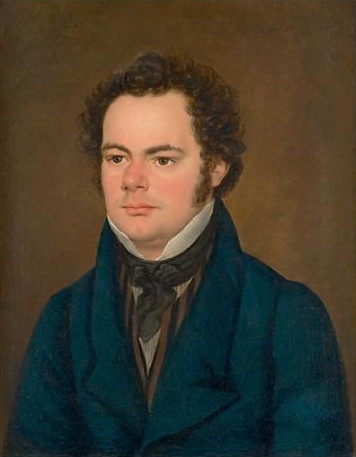
SCHUBERT, Franz

Born in Vienna, Jan 31, 1797
Died in Vienna, Nov 19, 1828

  • Fun fact: Schubert is often grouped with Haydn, Mozart, and Beethoven as a classical Viennese composer, but he was the only one of them native to Vienna.3
Categories
Classical (~1750–1820) Italian

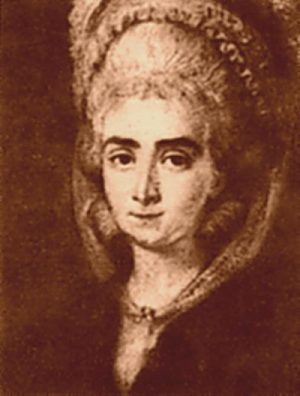
SIRMEN, Maddalena

Born in Venice, Dec 9, 1745 
Died in Venice, May 18, 1818 

Born Maddalena Laura Lombardini 

  • Sirmen was a Venetian singer, violinist and composer.  
  • Sirmen studied music at the Ospedale dei Mendicanti, one of Venice’s charity music schools for girls. However, she was probably not charity student; she likely chose to enroll there to participate in a quality all-girls’ music education.  
  • Sirmen also studied violin with Giuseppe Tartini
  • In 1767, Sirmen married the violinist Ludovico Sirmen, with whom she concertized throughout Europe. After 1771, she toured Europe on her own as a violinist and singer, appearing in London at the Bach-Abel concerts, as well as Paris, St. Petersburg, Dresden, and other cultural centers.4

Biography from Women’s Philharmonic Advocacy 

Categories
Classical (~1750–1820) Romantic (~1820–1900) German

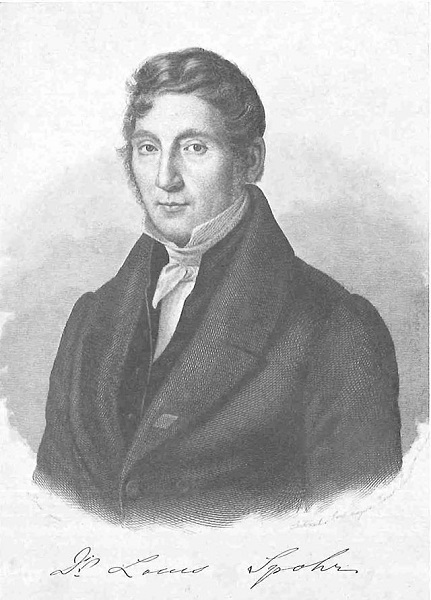
SPOHR, Louis

Born in Brunswick, April 5, 1784
Died in Kassel, Oct 22, 1859

  • Louis Spohr was a violinist, composer, and conductor who was well-known and highly respected during his lifetime. Unfortunately, his music fell into obscurity following his death and has only been resurrected within the last 50 years or so.
  • Spohr showed immense talent on the violin from an early age and, after some reservations from his father, was soon encouraged to pursue a musical career. As a musician and conductor, Spohr would go on to serve several prominent positions throughout his career, including leader of the orchestra at Gotha, leader of the orchestra at Theater der Wien in Vienna, director of the Frankfurt Opera, and Hofkapellmeister at the city of Kassel.
  • As a composer, Spohr was quite prolific. He wrote 11 operas, nine symphonies, 15 violin concerti, and many other chamber pieces and Lieder (~300 works in total). Like Beethoven, Spohr’s compositions straddle the Classical and Romantic eras:

“[Spohr’s] work looks… towards both the formalism and clarity of the Classical tradition, and the structural and harmonic experimentation associated with 19th-century Romanticism.”

Grove Music Online
  • Fun fact – As an important figure in the development of modern violin technique, Spohr invented the violin chinrest.
    • Bonus fun fact #1 – Spohr was among the first conductors to use a baton.
    • Bonus fun fact #2 – Mozart’s Marriage of Figaro and Wagner’s Tristan und Isolde were both composed during Spohr’s lifetime.
  • Regarding Spohr’s first name – he was christened as “Ludewig,” but given that French versions of names were more fashionable then, he was always known as “Louis.”5

Learn More

Indepth look into the life and works of the composer from Louis-Spohr.com
Short biography from the Philharmonia Baroque Orchestra

Categories
Classical (~1750–1820) Romantic (~1820–1900) Austrian

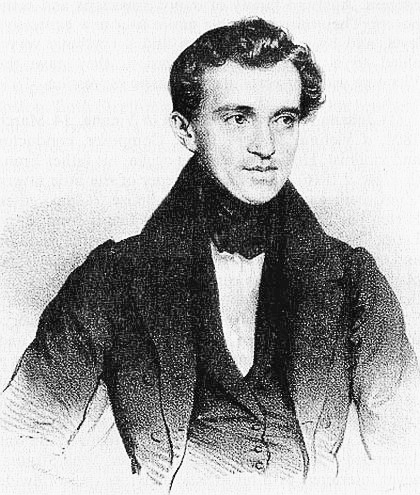
STRAUSS SR., Johann

Born in Vienna, 14 March 1804
Died in Vienna, 25 September 1849

  • Along with composer Joseph Lanner, Johann Strauss Sr. became one of the architect’s of the Viennese Waltz.
  • As a musician, Strauss was largely self-taught. At 13 years old, Strauss took an apprenticeship with a bookbinder and studied violin on the side.
    • As a young teen, Strauss joined Michael Pamer’s orchestra, known for performing light dance music. A few years later, Strauss left Pamer’s orchestra, and together with fellow musician, Joseph Lanner, they started their own ensemble (Lanner was responsible for directing the group).
    • By 1825, Strauss left Lanner’s orchestra to start his own… and the rest is history ;). Making a name for himself over the subsequent decades, Strauss received the prestigious title, “Imperial-Royal Director of Music for the Balls at Court,” from the Austrian Emperor in 1846.
  • Three of Strauss’s children–Johann Jr., Josef, and Eduard–carried on the family music tradition and continued to build on the family’s fame and legacy.6
Categories
Classical (~1750–1820) Czech

VANHAL, Johann Baptist

Born in Nechanice, Bohemia, May 12, 1739
Died in Vienna, Aug 20, 1813

[YO-han BAP-tist vahn-HALL]

  • Johann Baptist Vanhal (also spelled Wanhal) came from humble origins. He was born into serfdom in a small Bohemian town, though his family recognized his musical talent and encouraged and supported his studies as best they could. They even had the foresight to have Vanhal learn German so he could eventually pursue music in Vienna.
  • Thanks to the sponsorship of a countess who heard Vanhal perform on the organ and violin (and his compositions for the instruments), Vanhal was able to move to Vienna in the early 1760s.
  • In Vienna, Vanhal established himself as one of the city’s leading composers.7
  • As a composer, Vanhal was incredibly prolific. He wrote over 70 symphonies, in addition to dozens of masses, string quartets, and other works.
  • Vanhal was groundbreaking in that he was among the first prominent composers to build a successful freelance career (composing, teaching, and performing). He was highly respected by his Austrian contemporaries, such as Haydn and Mozart, both of whom performed his works.
  • As a teacher, Vanhal’s most well-known student was Ignaz Pleyel.8

Learn More
Biography via Interlude

Pieces


Categories
Classical (~1750–1820) Romantic (~1820–1900) German

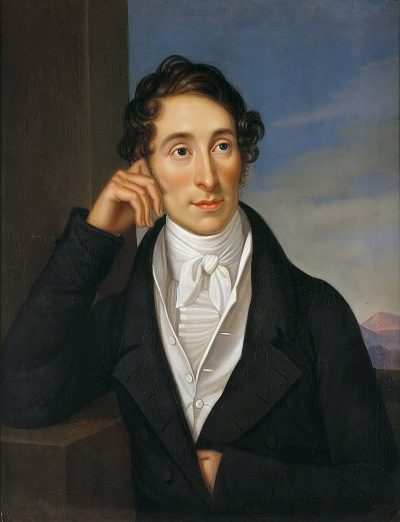
WEBER, Carl Maria von

Born in Eutin, c.Nov 18, 1786
Died in London, June 5, 18269

Short biography from Naxos Center