Categories
20th Century Estonian

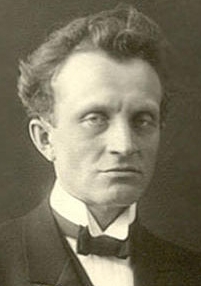
ELLER, Heino

Born in Tartu, March 7, 1887
Died in Tallinn, June 16, 1970

[HEY-no EHL-er]

  • Eller was educated at St. Petersburg Conservatory and later taught composition at schools of music in Estonia.
  • One of Eller’s composition students was Arvo Pärt.
  • Style: Eller’s music is influenced by Impressionism and Estonian folk music.1

Biography

Categories
Contemporary Estonian

PÄRT, Arvo

Born in Paide, Sept 11, 1935

  • Pärt’s music is known for the influence of early music, expressions of faith, and a gently dissonant style he calls tintinnabuli, in which a melody is built around repeating tonal triads, creating a diatonic dissonance that resembles the ringing of bells.
  • Pärt and his family relocated to Berlin after 1980, because the overtly religious and seeming archaic/simplistic style of his music met with disapproval from Soviet authorities and academics.2

Biography from the Arvo Pärt Centre

Categories
Late Romantic (~1860 – 1920) Estonian

TOBIAS, Rudolf

Born in Käina, Hiiumaa Island, May 29, 1873
Died in Berlin, Oct 29, 19183

  • Rudolf Tobias was an extremely important figure in the founding of an Estonian classical music tradition. His “Julius Caesar” Overture is considered to be a foundational symphonic work in the emergence of a distinct classical music culture in the country.4 
  • Tobias’s compositional output includes works for orchestra, chamber ensemble, choir, solo piano and organ, and solo voice.5

Biography (translated)

Categories
20th Century Estonian

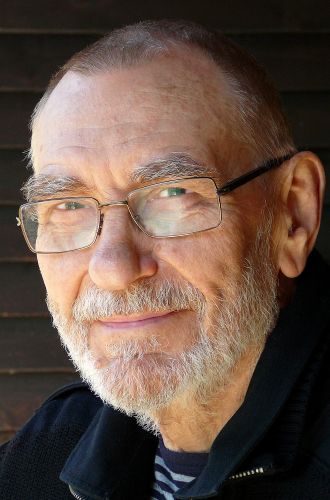
TORMIS, Veljo

Born in Kuusalu, near Tallinn, Estonia, 7 Aug 1930
Died in Tallinn, 21 Jan 2017

[PRONUNCIATION | VEHL-yoh TOR-mees]

  • Veljo Tormis almost exclusively wrote for voice, including choral works, songs/ song cycles, and opera, as well as a small number of instrumental works. According to his biography, for Tormis, “music begins with words.” Many of his works are based on ancient Estonian folk songs, as well as on the music of other Finno-Ugric peoples.
  • Tallinn came from a family of amateur musicians. At 12 years old, he was accepted at the music conservatory in Tallinn. A few years later, he continued his studies at the Moscow Conservatory.6
  • Since the fall of the Soviet Union, Tormis’s works have become better known and performed more frequently in the West.
  • Fun fact – Early on in his career, Tormis taught at the Tallinn Music School, and Arvo Pärt was one of his students.

Learn More
Composer’s website

Pieces