Categories
20th Century English

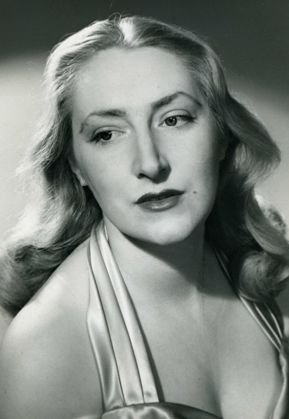
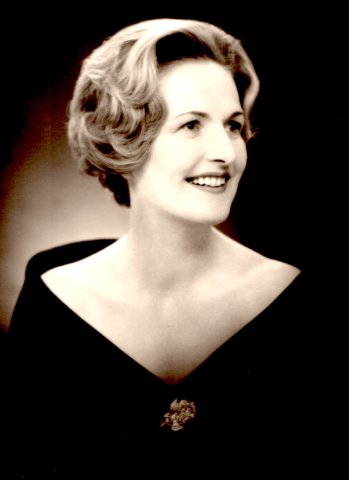
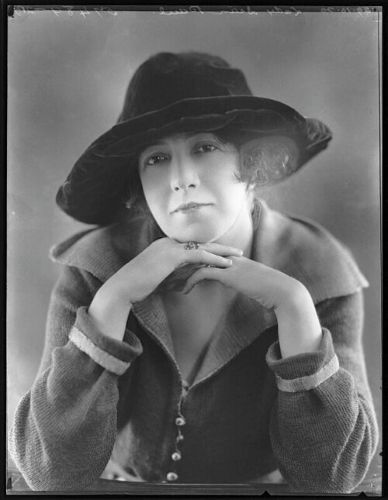
DRING, Madeleine

Born in London, Sept 7, 1923
Died in London, March 26, 1977

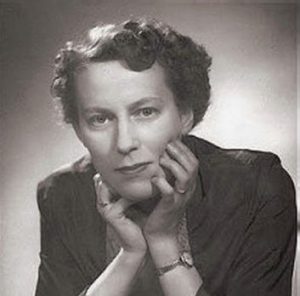
  • Madeleine Dring was a composer and actress who also played piano and sang.
  • At 10 years old, Dring won a scholarship to study violin and piano at RCM. As she continued her studies at the institution, she studied composition under Herbert Howells and Ralph Vaughan Williams.
  • As a composer, Dring primarily wrote chamber works and pieces for theatrical productions. Dring had a lifelong passion for theater. She performed in plays while also composing incidental music and songs for stage works.
    • Dring also wrote many pieces for her husband, Roger Lord, who was principal oboist of the London Symphony Orchestra.1
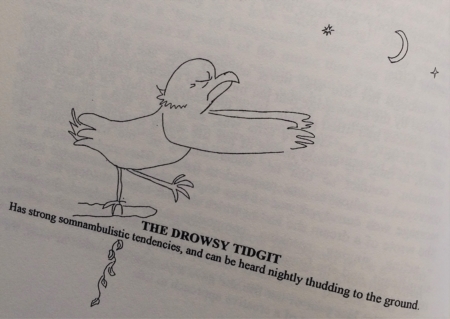
  • Fun fact – Dring often drew cartoons in her manuscripts and notebooks, as seen below.
Source: https://donne-uk.org/composer-spotlight-madeleine-dring/

Learn More
Biography and timeline via the Donne Foundation

Categories
Contemporary English

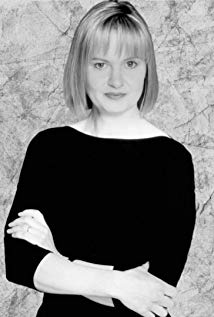
DUDLEY, Anne

Born in Chatham, May 7, 1956

Composer website

  • Anne Dudley is an RCM-educated film composer and pop musician.
  • Dudley’s credits include composing music for the TV show Jeeves and Wooster (1990-93) and the Oscar-winning score for The Full Monty (19972
Categories
Late Romantic (~1860 – 1920) English

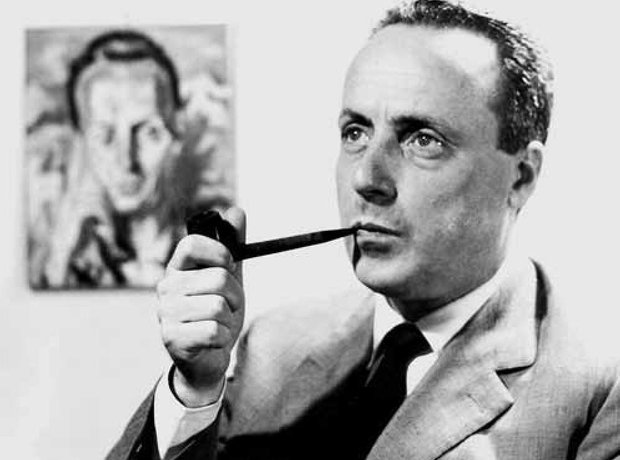
ELGAR, Sir Edward

Born in Broadheath, near Worcester, June 2, 1857
Died in Worcester, Feb 23, 1934

Short biography

Categories
20th Century Late Romantic (~1860 – 1920) English

FINZI, Gerald

Born in London, July 14, 1901
Died in Oxford, Sept 27, 1956

  • Finzi was an introspective composer, an agnostic and a pacifist, whose attitude toward life was shaped by the deaths of his father, brothers and music teacher in the First World War when he was a child.
  • Finzi found inspiration in nature. Although he taught for a time at the RAM, he and his wife Joyce, an artist, eventually chose to settle in the countryside where they cared for their orchard of apple trees and created their art in privacy.
  • Finzi founded and directed a small orchestra, the Newbury String Players, and through their concerts promoted the work of young composers. His orchestra also performed 18th century English music, one of Finzi’s research specialities. He also prepared scholarly published editions of these older works.
  • Finzi is known for his art songs, as well as choral works and orchestral works.3

Biography

Categories
20th Century Late Romantic (~1860 – 1920) English

FLETCHER, Percy

Born in Derby, Dec 12, 1879
Died in Windsor, Sept 10, 1932

  • Fletcher spent most of his career as a music director at London theaters.
  • In addition to his original compositions, Fletcher orchestrated many works by other composers, and created choral arrangements of Wagner which were popular among the choirs of his day.4

Biography

Categories
20th Century Late Romantic (~1860 – 1920) English

FOULDS, John

Born in Hulme, Manchester, Nov 2, 1880
Died in Calcutta, April 24, 1939

  • Foulds was a cellist, conductor and composer who wrote salon music and music for the theater as well as more experimental works using techniques like quarter-tones and non-western modes.
  • Foulds spent the latter portion of his life in India, studying Indian music and directing Western music radio programming for All-India Radio in Delhi.5

Biography

Categories
20th Century English

GARDNER, John

Born in Manchester, March 2, 1917
Died in Liss Forest, Hampshire, December 12, 2011

  • John Gardner was an organist, composer and teacher.
  • Gardner was an organ scholar at Exeter College, Oxford before serving in WWII. Later he taught at several English colleges and schools, including the Royal Academy of Music.
  • Gardner’s music is noted for eclecticism, with stylistic traits selected to fit the subject of each of his works, ranging from jazz to serialism to counterpoint to popular styles.6

Biography

Categories
Renaissance (~1400–1600) English

GIBBONS, Orlando

Born in Oxford, bap. Dec 25, 1583
Died in Canterbury, June 5, 1625

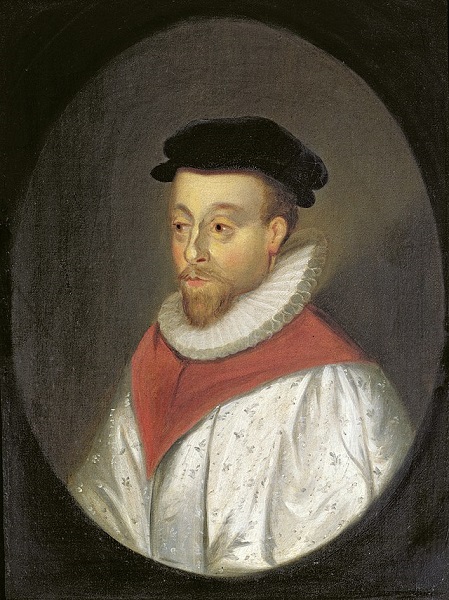
  • Orlando Gibbons was a late Renaissance composer, keyboardist, and leading musical voice of 17th-century English polyphony.
  • Gibbons came from a musical family – his father was a town wait in Cambridge, and his older brother was master of the choristers at King’s College, Cambridge.
  • Beginning around age 20, Gibbons was a musician in the Chapel Royal until his death.
    • For historical context, Queen Elizabeth I died in March 1603, making James I King of England. Given the date that Gibbons was first mentioned in the royal checkbook (May 1603), the musician’s employment likely coincided with the middle of this transitional period between monarchs.7
  • Gibbons is best known for his choral anthems, which display his mastery of 17th-century polyphony.
  • Historical fun fact – While serving as organist at Westminster Abbey, Gibbons officiated the funeral service of King James I.
  • Musical fun fact – Gibbons’s Fantasies in Three Parts for Viols is believed to have been the first music printed from copperplates in England.8
Categories
20th Century English

GIBBS, Armstrong

Born in Great Baddow, Essex, Aug 10, 1889
Died in Chelmsford, May 12, 1960

  • C. Armstrong Gibbs studied music at Trinity College, Cambridge, and later took classes at the Royal College of Music with Vaughan Williams, Charles Wood and Adrian Boult.
  • Gibbs was a composer, music educator and festival adjudicator.
  • As a composer, Gibbs is best known for his songs.9

Biography

Categories
20th Century English

GIPPS, Ruth, MBE

Born in Bexhill-on-Sea, Feb 20, 1921 
Died in Eastbourne, Feb 23, 1999 

  • Gipps was a child prodigy: she began her music studies at age 3 (at the Bexhill School of Music, her mother was its principal) and her first composition was published when she was 8 years old. 
  • Gipps studied composition with Gordon Jacob and Ralph Vaughan Williams at the Royal College of Music. She also studied oboe and piano there. 
  • Gipps became a trailblazing conductor in Britain, conducting the City of Birmingham Choir and guest conducting ensembles like the Pro Arte Orchestra and the London Symphony Orchestra. When professional appointments were scarce because of her gender, she founded her own orchestras: the London Repertoire Orchestra and the Chanticleer Orchestra. 
  • Gipps served as a professor of music at Trinity College of Music and the RCM, and served as chair of the Composers’ Guild of Great Britain.1

Biography and partial works list from the British Music Collection 

Biography from BBC Music 

Sources

  1. Jill Halstead, Lewis Foreman, and J.N.F. Laurie-Beckett, “Gipps, Ruth,” Grove Music Online (2001), accessed August 12, 2021,  https://www.oxfordmusiconline.com/grovemusic/view/10.1093/gmo/9781561592630.001.0001/omo-9781561592630-e-0000011199.  

Pieces

The Kelpie of Corrievreckan, Op. 5

Cringlemire Garden, Op. 39

Horn Concerto, Op. 58

Knight in Armour, Op. 8

Piano Concerto in g minor, Op. 34

Rhapsody in E-flat Major, Op. 23

Song for Orchestra, Op. 33

Categories
20th Century English

GOOSSENS, Eugene

Born in London, May 26, 1893
Died in Hillingdon, Middx, June 13, 1962

  • Sir Eugene Goossens was a conductor who began his career as an assistant to Sir Thomas Beecham. 
  • Goossens was a prominent conductor of opera in England, he directed the Cincinnati SO, Rochester SO and Sydney SO, and was instrumental in planning the Sydney Opera House.
  • Goossens was of Belgian extraction. Both his father and grandfather were also named Eugene Goossens and both were conductors in Belgium.10

Biography

Categories
Baroque (~1600–1750) English

GREENE, Maurice

Born in London, Aug 12, 1696
Died in London, Dec 1, 1755

  • Greene trained at St. Paul’s Cathedral in London, first as a choirboy under Jeremiah Clarke and later as an organist. Soon he succeeded as organist at St. Paul’s.
  • Greene’s organ students included prominent figures in the next generation of English organists, like William Boyce and John Stanley.
  • Greene was a founder-member of a secular music performance organization, The Academy of Ancient Music (the original one, not the one founded in the 1970s).
  • With his friend, composer and violinst Michael Festing, Greene helped found the Fund for the Support of Decay’d Musicians (which became the Royal Society of Musicians and is still supporting retired, injured or ill musicians).
  • Near the end of his life Greene was working on an anthology of historical and modern English music. He did not complete the project, but his pupil William Boyce did, producing the massively influential collection Cathedral Music.

Fun (?) Facts: The Beef Between Handel and Greene.

“From Greene’s great admiration of Handel’s manner of playing, he had literally condescended to become his bellows-blower, when he [Handel] went to St. Paul’s to play on the organ…. Handel, after the three o’clock prayers, used frequently to get himself and young Greene locked up in the church together, and in summer often stript unto his shirt, and played till eight or nine o’clock at night.” Charles Burney, music historian and acquaintance of Handel.

  • Unfortunately they had a falling out when Greene became friendly with Handel’s rival, the composer Bononcini. It is also possible that Handel envied Greene’s position in the Chapel Royal.

“Dr. Greene has gone to the devil!”Handel, on the occasion of Greene founding a concert series with Bononcini

“For many years of his life, Handel never spoke of [Greene] without some injurious epithet.”Charles Burney 1

Biography

Sources

  1. H. Diack Johnstone, “Greene, Maurice,” Grove Music Online (2001), accessed February 11, 2020, https://www.oxfordmusiconline.com/grovemusic/view/10.1093/gmo/9781561592630.001.0001/omo-9781561592630-e-0000011707.

Pieces

6 Overtures in 7 Parts

Categories
20th Century English

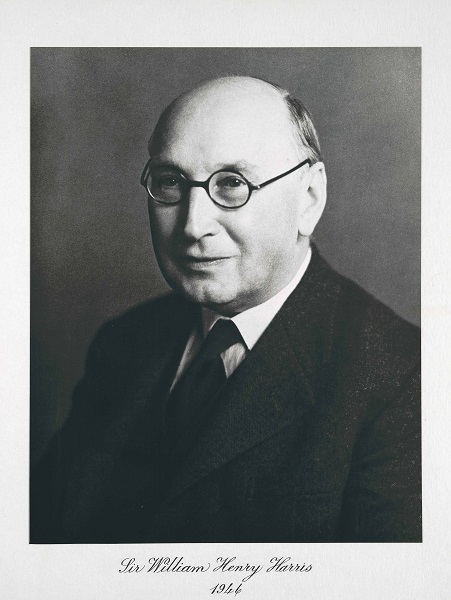
HARRIS, Sir William

Born in London, March 28, 1883
Died in Petersfield, Sept 6, 197311

  • Fun fact – among his many other professional positions (choirmaster, organist, and composer), Harris was also the piano teacher to the young princesses Elizabeth and Margaret while he served as Director of Music of St George’s Chapel, Windsor.12

Biography

Categories
20th Century English

HARRISON, Pamela

Born in Orpington, Nov 28, 1915
Died in Firle, East Sussex, Aug 28, 1990

  • Pamela Harrison was an RCM-educated composer, pianist, and scholar of Dalcroze eurythmics. Her teachers included Gordon Jacob and her composition influences included Bax and Ireland.13

Biography

Categories
Contemporary English

HESS, Nigel

Born in 1953

Composer website

  • Nigel Hess is a television, theater and film composer who studied at Cambridge University.
  • He was Company Music Director of the Royal Shakespeare Company from 1981-5, writing music for twenty Shakespeare productions there.
  • Some of Hess’s many TV credits include music for the BBC series Maigret  and Hetty Wainthrop Investigates.14
Categories
Renaissance (~1400–1600) English

HOLBORNE, Anthony

Born c.1545
Died c. 29 Nov – 1 Dec 1602

  • Little is known of Anthony Holborne. He published two collections of music during his lifetime: The Cittharn School (London, 1597) and Pavans, Galliards, Almains and Other Short Aeirs both Grave, and Light, in Five Parts, for Viols, Violins, or Other Musicall Wind Instruments (London, 1599).15
    • The cittharn (cittern) is a member of the lute family.
  • Holborne’s brother William Holborne was also a composer, and contributed some pieces to The Cittharn School.16

Short biography

Categories
Late Romantic (~1860 – 1920) English

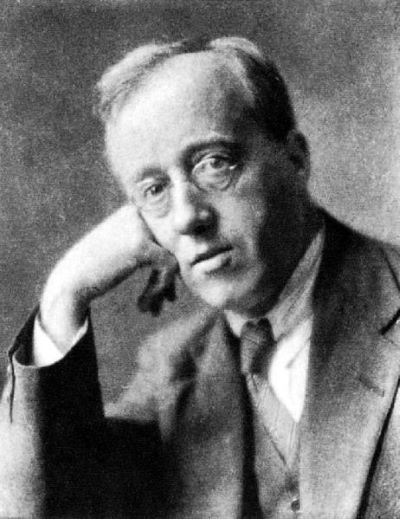
HOLST, Gustav

Born in Cheltenham, Sept 21, 1874
Died in London, May 25, 1934

Biography

Categories
20th Century English

HOWELL, Dorothy

Born in Birmingham, Feb 25, 1898 
Died in Malvern, Jan 12, 1982 

  • Howell was a pianist and composer who studied at the Royal Academy of Music. She also taught harmony and counterpoint there from 1924-1970. 
  • Howell’s style is neoromantic and many of her works feature the piano, a reflection of her performance specialization in that instrument.17

Biography from the Birmingham City Council 

Categories
20th Century English

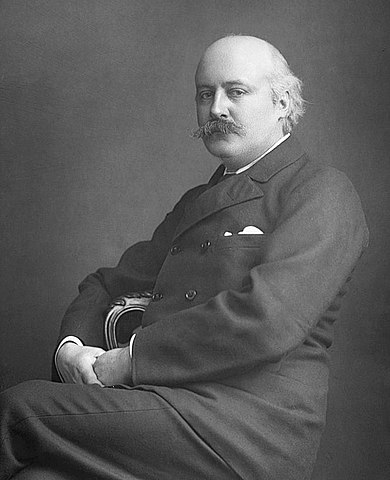
HOWELLS, Herbert

Born in Lydney, Gloucestershire, Oct 17, 1892
Died in London, Feb 23, 1983

  • Herbert Howells was a distinguished English composer best known for his choral and organ music, though he also wrote songs, piano works, and chamber/ orchestral music. His Three Carol Anthems (which includes “A Spotless Rose”) helped bring the young composer to prominence.
  • Howells studied at the Royal College of Music and was a pupil of Charles Villiers Stanford (Stanford even described Howells as his “son in music”). Hubert Parry, director of the institution at the time, also made a significant impact on the young composer. Parry’s “philosophy and humanity inspired a deep and lasting affection.”18
  • Howells was deeply affected by the death of his nine-year-old son, Michael, in 1935 due to polio. Everything Howells wrote after that significant life event was in some way written in memory of Michael.
    • Howells’s ability to express deep emotion and pathos is part of what has made his music so powerful and enduring.
  • As a composer, Howells felt a strong connection to music from the Tudor era (as did Vaughan Williams), which is evident in much of his music.19
    • Fun fact – Howells had a love of cathedral architecture and often wrote church music for specific buildings.20

“Howells is a composer whose music stirs profound emotional reactions from performers and audiences alike.”21

Short biography from the Herbert Howells Trust

Pieces


Categories
Romantic (~1820–1900) English

HURLSTONE, William

Born in London, Jan 7, 1876
Died in London, May 30, 190622

Biography from Chandos

Pieces


Categories
20th Century English

IRELAND, John

Born in Bowdon, Cheshire, Aug 13, 1879
Died in Rock Mill, Washington, Sussex, June 12, 1962

  • John Ireland studied composition with Stanford, at the RCM, worked as a choirmaster and organist.
  • Ireland eventually taught at the RCM himself, where his students included Benjamin Britten.23

Biography

Categories
20th Century English

JACOB, Gordon

Born in London, July 5, 1895
Died in Saffron Walden, June 8, 1984

  • Gordon Jacob was an English composer, educator, and writer.
  • He studied at the Royal College of Music with Sir Charles Villiers Stanford, Herbert Howells, Ralph Vaughan Williams, and many other notable English musicians.
    • Not long after finishing his studies, Jacob joined the teaching staff at RCM himself, where he held a position for over 40 years. His pupils included Sir Malcolm Arnold, Imogen Holst, Elizabeth Maconchy, and Ruth Gipps.
  • Like many of his English colleagues, Jacob avoided the rise of the Avant-Garde in the mid-20th century. His music was influenced by early 20th-century French and Russian schools of thought.
    • In a BBC TV documentary in 1959, Jacob said, “I personally feel that the day that melody is discarded, you may as well pack up music altogether.”
  • Fun fact – Jacob provided music for the coronation of Queen Elizabeth II in 1953.24

Short biography from Naxos

Categories
Baroque (~1600–1750) English

JENKINS, John

Born in Maidstone, 1592
Died in Kimberley, Norfolk, Oct 27, 1678

  • Jenkins was a lutenist, a player of the lyra viol, and a composer of consort music.
  • Jenkins worked for many wealthy English patrons as a performer and a teacher and was also connected with the royal court after the Restoration.25
    • Fun Fact: the lyra viol is a small bass viol sometimes known as the viola bastarda

“He was a person of much easier temper than any of his faculty, he was neither conceited nor morose, but much a gentleman, and had a very good sort of wit, which served him in his address and conversation, wherein he did not please less than his compositions.”

Roger North, on Jenkins. English writer, biographer, and amateur musician Roger North was of Jenkins’ music students. (The Autobiography of the Hon. Roger North, 79.)

Biography

Categories
Contemporary English

LANE, Philip

Born in Cheltenham, 1950

  • Philip Lane studied music at Birmingham University.
  • Lane composes music for BBC plays and for TV animation as well as concert music, and has often been called upon to reconstruct vintage film scores from minimal resources, including transcribing by ear from video recordings.26

Biography

Pieces


Categories
20th Century English

LEIGHTON, Kenneth

Born in Wakefield, Oct 2, 1929
Died in Edinburgh, Aug 24, 1988

  • Leighton was a child chorister at Wakefield Cathedral, studied composition at Queen’s College, Oxford, and went on to teach at Leeds University, Oxford, and Edinburgh University.
  • Style: Leighton composed many pieces of choral sacred music, and his instrumental works are also influenced by liturgical tradition, with themes frequently inspired by plainsong or chorales.27
Categories
Contemporary English

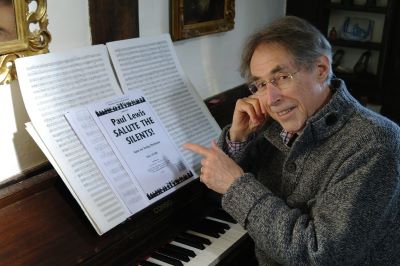
LEWIS, Paul

Born in 1943 in Brighton, England

Composer Website

  • Lewis was inspired to enter the world of TV music when he saw Lawrence Olivier’s films with music by William Walton when he was 12.
  • Lewis chose to avoid professional music training, instead opting to leave school at 15 to work in music publishing.
  • Lewis wrote his first TV score at age 19 and has been working busily for British TV ever since.
  • Fun fact: among other shows, Lewis’s production library music can be heard on Antiques Roadshow and SpongeBob SquarePants.28
Categories
20th Century Late Romantic (~1860 – 1920) English

LLOYD, George

Born in St Ives, Cornwall, June 28, 1913
Died in London, July 3, 1998

“I never wrote 12-tone music because I didn’t like the theory. I studied the blessed thing in the early 1930s and thought it was a cock-eyed idea that produced horrible sounds. It made composers forget how to sing.”1– George Lloyd

  • George Lloyd was an English composer and conductor who became an icon for anti-modernism in classical music.
  • Lloyd studied at Trinity College of Music and the Royal Academy of Music. By his late teens/ early twenties, he had composed his first symphony (Symphony No. 1, 1932)and his first opera (Iernin, 1933-34).
  • Lloyd was highly inspired by Verdi in his writing, particularly in his operas.
  • During WWII, Lloyd served with the Royal Marines as a bandsman. During a shipping accident, the composer was one of only four survivors and suffered from oil ingestion and shell shock (not to mention trauma).
    • Following his recovery from the war, Lloyd intermittently composed while also working as a market gardener in Dorset. About 20 years later, in 1973, he moved to London and once again took up composing full-time, with great success. The last 20 years were seen as a renaissance for the composer.2

Learn More

Biography from the George Lloyd Society (lots of photos!)
Short biography from BBC Music Magazine

Sources

  1. “George Lloyd (1913 – 1998),” The George Lloyd Society, accessed April 25, 2023, https://georgelloyd.com/george-lloyd/george-lloyd-biography.
  2. Lewis Foreman, “Lloyd, George,” Grove Music Online (2001), accessed April 25, 2023, https://www.oxfordmusiconline.com/grovemusic/view/10.1093/gmo/9781561592630.001.0001/omo-9781561592630-e-0000016822.

Pieces

Symphony No. 5 in B-flat Major

Symphony No. 4 in B Major

Categories
Baroque (~1600–1750) English

LOCKE, Matthew

Born in Exeter (probably), 1621–3
Died in London, shortly before Aug 10, 1677

  • Matthew Locke was the leading composer of Restoration England. He was employed by the royal court under Charles II (Composer to the King’s “Private Music”) as well as several other aristocratic establishments in England.
  • Locke was trained in the Exeter Cathedral choir, where he studied with Edward Gibbons (brother of Orlando Gibbons) and became a prominent organist.
  • Locke also wrote extensively for the London theater. His works include incidental music for The Tempest (1675), a masque on he story of Orpheus and Euridice, and a score for a semi-sung work called Psyche, which helped pave the way for semi-operas by later English Baroque composers, notably Henry Purcell.
  • At Locke’s death, Purcell took over his position as composer for the royal ensemble, the 24 Violins. Purcell was friends with the older composer, and wrote a musical elegy for him, “On the Death of his Worthy Friend Mr. MATTHEW LOCKE’, What hope for us remains now he is gone? (Z472).29
Categories
Contemporary English

LYON, David

Born in Walsall in 1938

Composer’s Website

Pieces


Categories
Romantic (~1820–1900) English

MACFARREN, George

  • Sir George MacFarren was one of the 19th century’s most prolific English composers, particularly popular in his time for his choral works.
  • MacFarren was one of the first English musical nationalists, influenced by folk song, and by English history and folklore.

[I] “worked hard, not for the sake of work, but for the love of work

Sir George MacFarren, on his prolific output 30

Categories
20th Century English

MOERAN, Ernest John

Born in Heston, Middlesex, England, Dec 31, 1894
Died near Kenmare, Co. Kerry, Ireland, Dec 1, 1950

  • Moeran was a prodigy who started to compose as a child, studied at the RCM, and later studied privately with John Ireland.
    • Moeran’s study at the RCM was interrupted by service in WWI. He initially served as a motorcycle dispatch rider, and was wounded in France in 1917.
    • In 1918 his battalion was sent to Ireland to deal with republican unrest. He collected a lot of Irish folk songs while he was there, and went back to collect more after he left military service.
  • Coming from an affluent family, Moeran had the ability to compose whatever music appealed to him, rather than having to worry about earning money from his works. He also had the ability to finance performances of his own music.
  • From 1925-1928 he shared a cottage with Philip Heseltine (Peter Warlock). Their home became a notorious partying house. Unfortunately, Moeran developed a debilitating alcohol dependency at this time, which affected his ability to compose.31
Categories
Contemporary English

NYMAN, Michael

Born in London, March 23, 1944

Composer Website

  • Nyman’s music often employs experimental techniques, like aleatoric procedures and postmodern quotation or sampling from historic compositions.
  • Later in his career Nyman’s music became lyrical and more influenced by folk music.
  • Fun fact: As writer on music, Nyman was one of the first people to use the term “minimal” for the music we now describe as “minimalist.”
  • Nyman has composed scores for a number of films, including Gattaca (1997) and The Libertine (2004). 32
Categories
20th Century English

ORR, Charles Wilfred

Born in Cheltenham, July 31, 1893
Died in Painswick, Feb 24, 1976

  • Orr is best known as a composer of art songs, particularly his settings of A.E. Housman’s poetry.
  • Orr and his wife lived a quiet life in the countryside because Orr was ill with eczema and tuberculosis most of his adult life.
  • Orr’s composition mentors included Frederick Delius and Peter Warlock.1

Composer biography

Sources

  1. Jane Wilson, “Orr, C(harles) W(ilfred),” Grove Music Online (2001), accessed November 19, 2019,  https://www.oxfordmusiconline.com/grovemusic/view/10.1093/gmo/9781561592630.001.0001/omo-9781561592630-e-0000020497.

Pieces

A Cotswold Hill-Tune

Categories
20th Century Romantic (~1820–1900) English

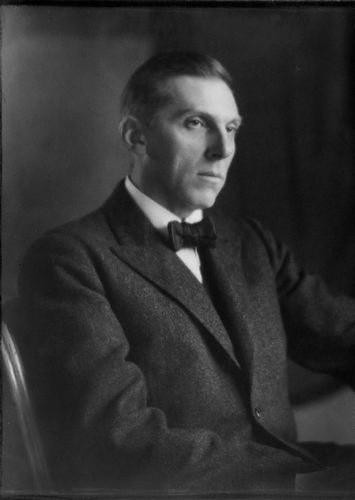
PARRY, Sir Charles Hubert Hastings

Born in Bournemouth, Feb 27, 1848
Died in Rustington, Sussex, Oct 7, 1918

  • Sir Charles Hubert Hastings Parry was one of the foremost English composers, music scholars and teachers of the 19th century and did much to revitalize music education standards in England.
  • Parry’s most influential musical mentor was Edward Dannreuther, who was largely responsible for aiding Parry’s passion for Richard Wagner‘s music.
  • Parry was Director of the Royal College of Music from 1895 to the end of his life. Due to this role, in addition to his position as Heather Professor of Music at Oxford from 1900-08, Parry was essentially the face of British classical music at the time.
  • Fun fact: Parry worked for George Grove as a sub-editor for the first edition of Grove’s Dictionary of Music and Musicians. Parry wrote more than 100 articles in the first Grove’s.33

“Although Parry’s ceremonial music embodies a sense of strength and confidence, on a deeper level his musical language imparts something much more aspirational – a longing for a better world in which music will help to raise humanity to new heights.”34

Short biography
Timeline via Google Arts & Culture
Categories
Baroque (~1600–1750) English

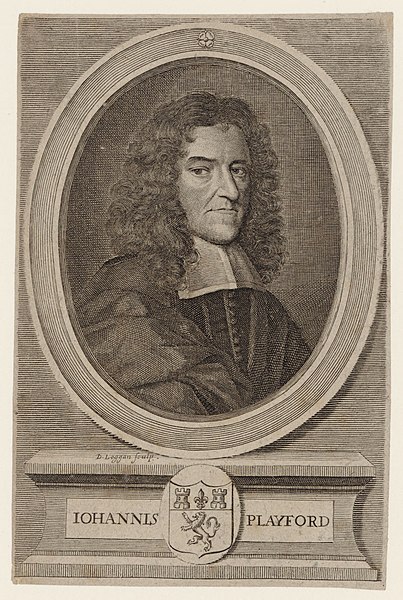
PLAYFORD, John

Born in Norwich, 1623 
Died in London, between Dec 24, 1686 and Feb 7, 1687 

  • John Playford was an English bookseller, music publisher. 
    • Note that, though he appears in MusicMaster and in this site under the heading “composer” (there’s nowhere else to put him) he’s actually a publisher who compiled and preserved anonymous tunes in The English Dancing Master – he didn’t write the music.
  • Playford was the foremost London music printer in the late 1700s. He founded a publishing dynasty in which his sons Henry Playford and nephew John Playford II took part. 
  • Playford had a strong impact on English Baroque music, especially sacred music (a special interest of his). The poet Nahum Tate wrote an elegy at Playford’s death, which Henry Purcell set to music.35

Biography from Brittanica 

Categories
20th Century Late Romantic (~1860 – 1920) English Polish

POLDOWSKI (Lady Irène Dean Paul)

Born in Brussels, May 16, 1879
Died in London, Jan 28, 1932

  • Poldowski was the daughter of violinist and composer Henryk Wieniawski, though he died when Poldowski was only 10 months old.
    • Interesting fact: Poldowski was the only one of Wieniawski’s seven children to go into music professionally.
    • Poldowski was an intentionally genderless pseudonym the composer used to publish her works. She was known by many names during her lifetime: Régine Wieniawski, Irène Wieniawska, and Lady Dean Paul.
  • Although she was born in Brussels, Poldowski spent most of her life in England. Her mother was English, and Poldowski married Sir Aubrey Dean Paul in 1901, later becoming a naturalized British citizen.
  • As a composer, Poldowski began performing her own works while still a teenager. She became most famous for her art songs. She also wrote works for orchestra and chamber ensemble. French artists were a primary source of inspiration for her (most of her songs use French poetry).36
  • Additional fun fact: Poldowski developed a love of fashion and opened a clothing boutique where she designed some of the pieces herself.37

Learn More
Biography via Interlude

Pieces


Categories
Baroque (~1600–1750) English

PURCELL, Henry

Born in London, 1658 or 1659
Died in London, Nov 21, 1695

  • In addition to his opera Dido and Aeneas and other dramatic works, Purcell composed extensively for the church and for the keyboard.
  • Purcell was trained as a choirboy in the Chapel Royal, under the direction of Pelham Humfrey.
  • Purcell composed for the English royal court throughout his life, and also served as organist of Westminster Abbey.38

Short biography

Categories
20th Century Late Romantic (~1860 – 1920) English

QUILTER, Roger

Born in Hove, Nov 1, 1877
Died in London, Sept 21, 1953

  • Quilter was best known as a writer of English art song, especially favoring texts by Shakespeare, Shelley and Herrick.39

Short biography

Categories
20th Century English

ROOTHAM, Cyril

Born in Bristol, Oct 5, 1875
Died in Cambridge, March 18, 1938

  • Cyril Bradley Rootham [ROO-tum] was an organist, teacher, and composer. He is best remembered as the organist and music director at St. John’s College, Cambridge, where he served from 1901 until his death in 1938. Rootham received a bachelor’s degree in music from the institution in 1900.
    • Fun fact: Five generations of the Rootham family had connections with or have graduated from St. John’s College.
  • Rootham spent more effort promoting the works of his fellow contemporary composers than his own.
  • As conductor of the Cambridge University Musical Society, Rootham helped influence English musical tastes in the early 20th century. He revived the music of past composers, such as Handel, Mozart, and Purcell, and promoted works by contemporary non-English composers like Kodály, Honegger, and Pizzetti.40

Learn More
Bio via English Heritage Music Series

Pieces


Categories
Contemporary English

RUTTER, John

Born in London, Sept 24, 1945

Composer website

  • In addition to his remarkably successful career as a composer of choral music, Rutter has also served as director of music at Clare College, Cambridge, founder-director of The Cambridge Singers, and an editor of choral music.41